

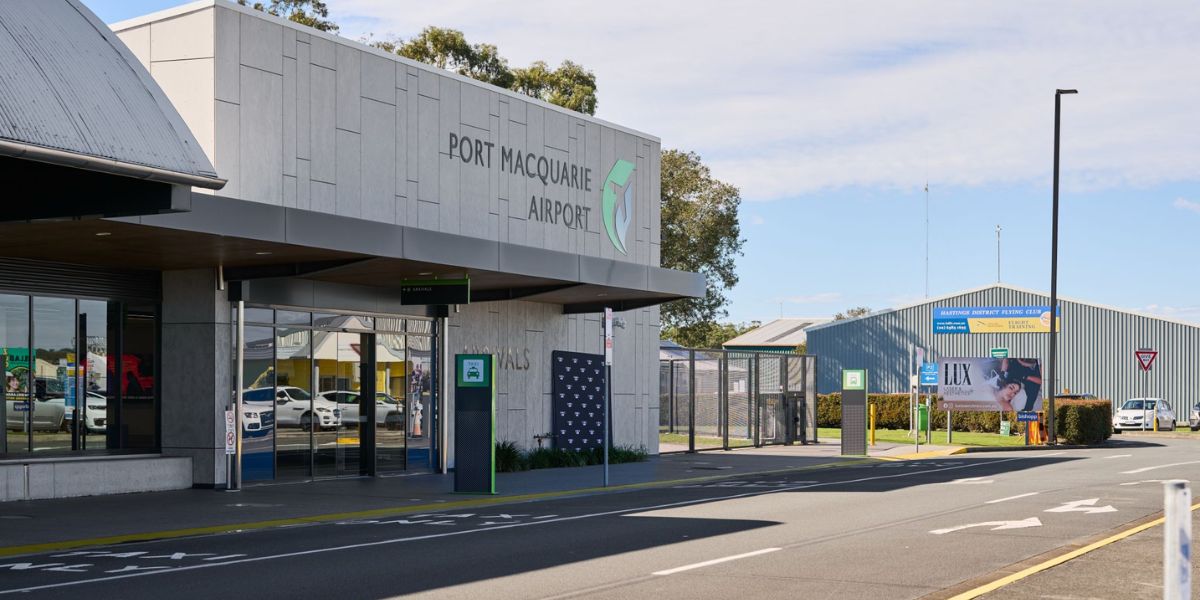
North Coast airports like Coffs Harbour and Ballina Byron Gateway are the kind of local-government-owned gateways at the centre of a blunt warning delivered to a Senate inquiry this month: regional aviation is buckling under funding pressure and a lack of airline competition, and something has to give.
Regional Capitals Australia has taken its call for greater investment in regional airports to Canberra, warning limited funding and a lack of airline competition are putting essential regional air connections at risk, the very connections North Coast communities rely on to reach specialist health care, education and family on time. For towns where the nearest major hospital or specialist can be hours away by road, a functioning local airport is not a nicety, it is often the fastest way to get there.
RCA Chair and Dubbo Regional Council Mayor, Cr Josh Black, presented the organisation’s submission to the Senate Rural and Regional Affairs and Transport References Committee on Friday, 11 September, as it examines reliable and affordable aviation services for rural, regional and remote communities. Cr Black told the hearing that financially sustainable regional airports and affordable aviation underpin regional connectivity, community safety and resilience.
“Regional aviation has a unique ability to provide equality of opportunity, by closing distance and connecting people to specialist health and education,” Cr Black said.
“That benefit only exists when things are working well, and to be frank at the moment, things are not working well.”
The figures behind that warning are stark. RCA presented findings from the 2026 ACIL Allen Airport Sustainability Survey, commissioned with the Australian Airports Association, which found 73 per cent of regional airports surveyed operated at a loss, with a median loss of $519,000. Sixty seven per cent of surveyed airports are deferring required capital investment due to funding constraints, and 63 per cent cannot fund required safety or security upgrades.
Yet these are the same airports quietly propping up emergency and health services across the bush. The same survey found 93 per cent of airports supported Royal Flying Doctor Service activity, 83 per cent supported emergency services and 61 per cent supported search and rescue operations, many without any cost recovery at all.
Cr Black said local governments, which mostly own and operate regional airports, were being asked to maintain infrastructure that state and federal governments and communities relied on, without the funds needed to support the airport’s operation.
“The fact is that regional communities are being hit twice, once to maintain their airports through rates and then through high airfares,” Cr Black said.
It is a familiar bind for North Coast councils, several of which own and run the small airports that keep their towns connected when the highway is not an option. Under Cr Black’s account, those councils are stuck footing the bill for critical infrastructure that state and federal governments, and entire communities, depend on, while getting little help to keep it running.
RCA’s submission also pointed to a lack of competition pushing airfares higher, with government figures showing 56 per cent of regional routes served by a single airline and regional flights costing on average 52 per cent more per kilometre.
Cr Black said anyone who flew regionally saw the effects.
“Anyone who flies regionally sees it: exorbitant fares, late cancellations, services that will not get you where you need to be at a reasonable time,” Cr Black said.
“People need a service they can afford and rely on. Where there is little competition, a fare increase or a withdrawn service can put health care, study or work further out of reach. Where you live should not determine your access to those opportunities.”
RCA asked the committee to recommend sustained airport funding, fairer security costs, targeted affordability measures and protection for essential routes when airlines restructure or withdraw, all sitting within a national framework backed by long-term funding pathways.
“The Australian Government could take immediate action in the May 2027 Budget by backing RCA’s $200 million Regional Airport Fund ask,” Cr Black said.
Something going on in your part of the North Coast people should know about? Let us know by emailing newsdesk@nctimes.com.au