

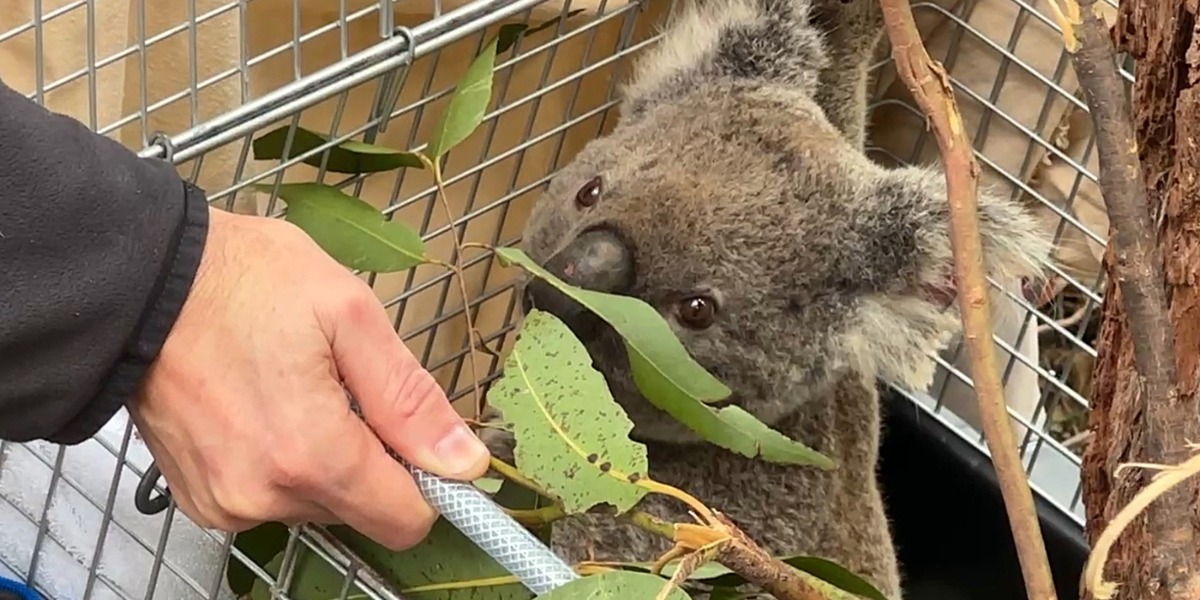
He escaped a bully, survived a plunge into the sea, and gave Byron Bay’s koalas a fighting chance. Little Watego’s extraordinary story has helped drive a major tree-planting push to save the headland’s famous koala colony.
The young koala was found in August 2025 at the bottom of a cliff near Byron Bay’s Little Wategos Beach, which gave him his name. Pictures of the three-year-old staring out to sea went viral, but he was far from relaxing. His sternum was bruised, suggesting a fall, and he had ingested sea water which inflamed his lungs.
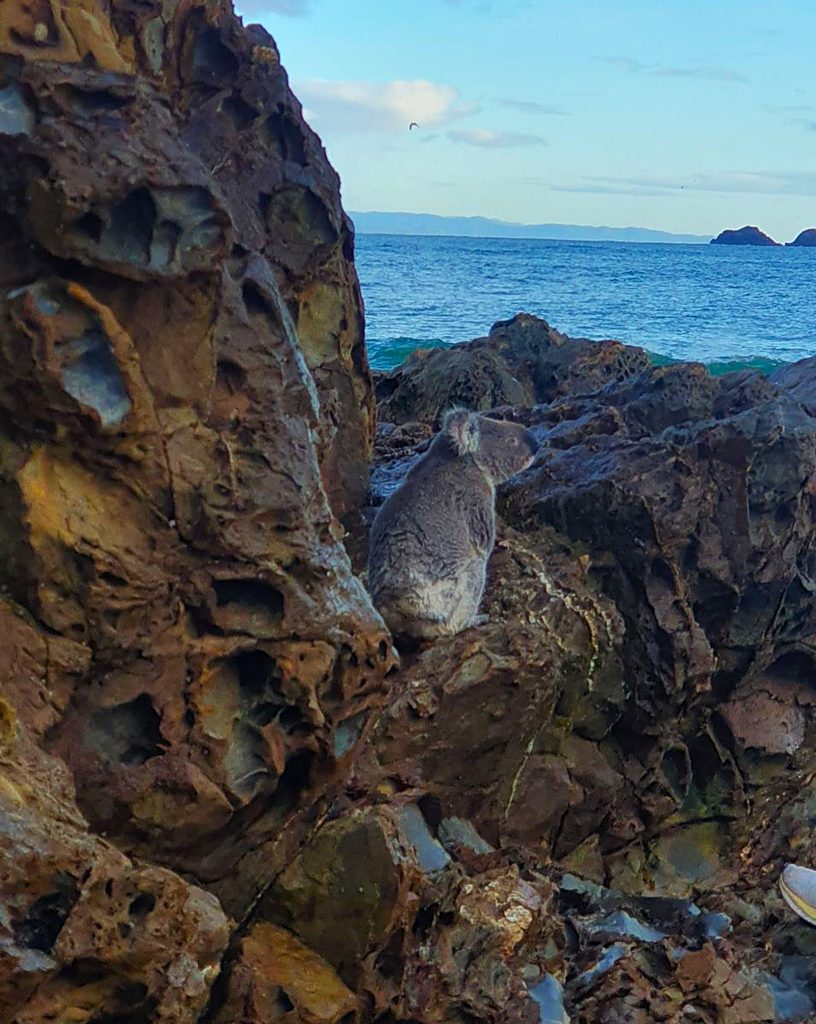
Wildlife rescuers Mark Badgery from WIRES and Richard Nicholas from Friends of the Koala climbed down onto the rocks to save him. Mr Badgery recognised Little Watego from distinct nose markings as a young male he had previously photographed being terrorised by the resident alpha male, known as Arnie.
Little Watego was likely searching for new territory when he tumbled into the sea. He was lucky to survive.
His ordeal drew attention to bigger problems facing the famous koalas on the Byron Bay headland. The eucalypts in their small patch of forest are over browsed, and each year thousands of tourists flock to the headland hoping to see a koala, with many getting too close and causing stress. Leaving to find new habitat is not easy either, with the headland koalas boxed in by ocean, housing and roads, where getting hit by vehicles is a constant threat.
On 29 July 2026, thousands of trees were planted in Arakwal National Park to extend habitat south for koalas dispersing from the headland. Bangalow Koalas organised the community event in consultation with the Arakwal National Park joint management committee, which includes representatives of the Native Title Traditional Owners. Together with National Parks rangers, students from Byron Bay High, Australia Post volunteers and other community members, 2,200 trees were planted on the day, with contractors taking the total to 3,700 seedlings in the ground.
Nicole Forrester, Chief Regenerative Officer at WWF-Australia, said Little Watego’s story was a powerful reminder of why habitat mattered.
“Little Watego’s story is a powerful reminder of why habitat matters. When habitat becomes fragmented, koalas are forced to travel further and spend more time on the ground. This increases their exposure to danger,” Ms Forrester said.
“My hope is that in years to come, this area will be part of a thriving corridor of native vegetation, supporting koalas and the many other species that share their forest homes.”
Norm Graham, an Arakwal-Bundjalung man and National Parks ranger, said the plantings would help connect vegetation between Cape Byron State Conservation Area and Arakwal National Park.
“These plantings will help connect koala friendly vegetation between Cape Byron State Conservation Area and Arakwal National Park by providing food and reducing the pressure faced at the Pass and Cape,” Mr Graham said.
“Our Country’s had a lot of impacts over time. Where we’re standing today has been impacted by sand mining. It is a little bit of a scar on the landscape, and today is about healing that scar.”
Bangalow Koalas president Linda Sparrow said the sight of Little Watego stranded on the rocks had stayed with her.
“The sight of Little Watego on the rocks was so distressing. That poor koala could’ve been washed out to sea,” Ms Sparrow said.
“This planting is because Little Watego had nowhere to go, no trees to find.”
“Koalas from the area known as The Pass on Cape Byron are under enormous pressure. Their trees are over browsed, they’re under the constant threat of car strikes and getting harassed by tourists and people in general.”
As for Little Watego himself, he was nursed back to health at the Northern Rivers Koala Hospital, run by Friends of the Koala, before being released on 6 September 2025 to less populated forest at Broken Head. Carers placed him on a large tree within an enclosure to monitor him, but when they returned the next day, he was gone, having escaped once again.
This time, he is enjoying a new home and a fresh start.
Like what you’re reading? Support North Coast Times by making a small contribution today and help us keep delivering local news paywall-free. Donate now