

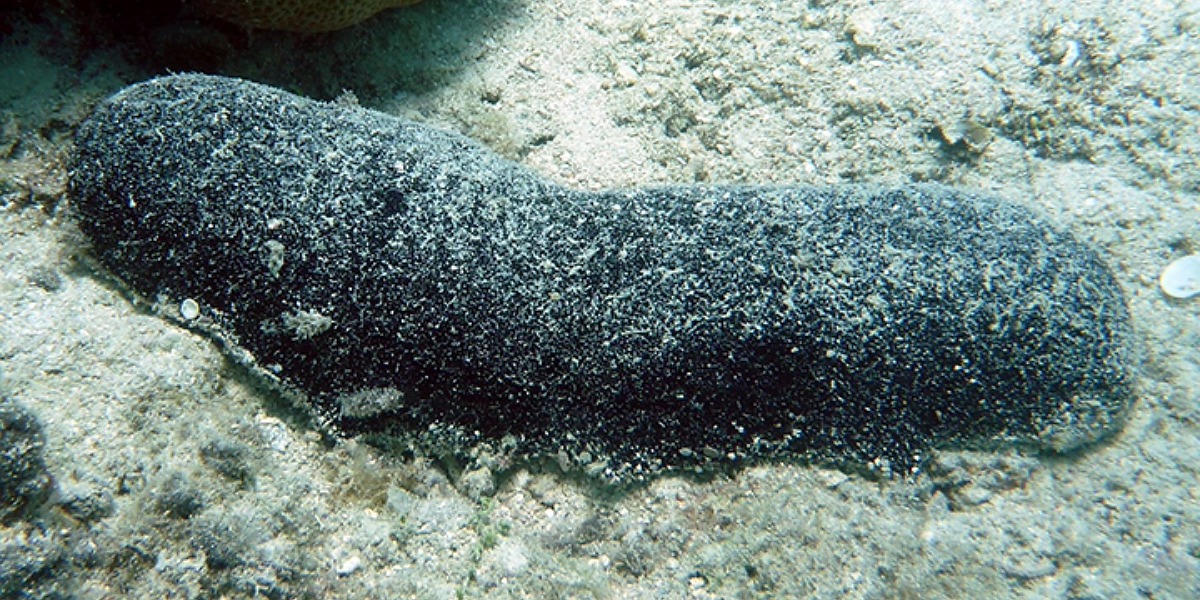
A Southern Cross University marine scientist has helped uncover a jaw-dropping secret hiding in the sand of the Great Barrier Reef: some sea cucumbers can live for more than a century.
Professor Steven Purcell, from Southern Cross University’s National Marine Science Centre in Coffs Harbour, was part of the team behind a world-first genetic study into the endangered black teatfish sea cucumber, often dubbed the “earthworm of the sea”.
The study, led by Dr Sven Uthicke from the Australian Institute of Marine Science, compared DNA samples from a population of black teatfish collected in a no-take zone of the Great Barrier Reef Marine Park off Lizard Island in 2000 with samples taken from the same spot 24 years later.
The results, published in the journal iScience, stunned the researchers.
“We had a hunch that they could get older than the 10 years that was commonly thought,” Dr Uthicke said.
“We collected 55 animals to sample and thought if we find three that were the same individuals as 24 years ago, that would be amazing.”
“In fact, we found 60 per cent, or 33 animals, were the same as those sampled in 2000, and that really was a surprise.”
“It shows adult black teatfish have extreme longevity and very low natural death rates. We found they live for at least 24 to 27 years on average, while some live for more than 100 years.”
The mark-recapture study involved taking a small biopsy from each animal before returning them to the reef, with modelling then used to estimate their lifespan.
Professor Purcell, who has specialised in sea cucumber research for 25 years, said the findings had major implications for how the animals are managed.
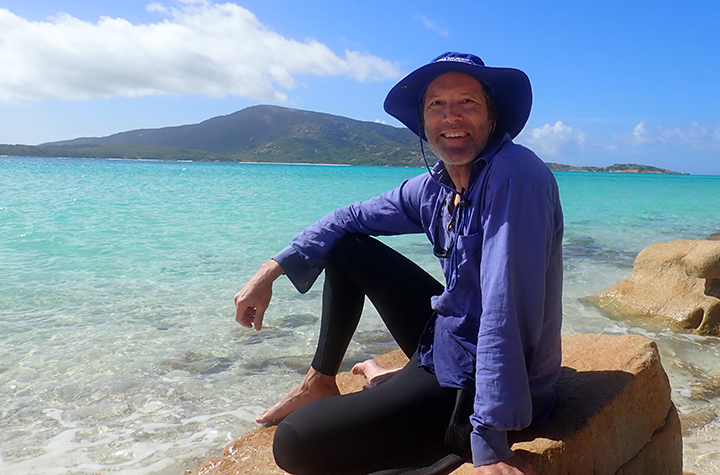
“This study is a gamechanger because it shows that some sea cucumber species might only sustain very low rates of harvesting,” Professor Purcell said.
“This is a major breakthrough because conservation platforms and trade regulations for endangered wildlife are based upon estimates of an animal’s lifespan. Scientific consensus is that longer lived species are at greater risk of population collapse.”
Sea cucumbers play an important ecological role on the reef, recycling nutrients and mixing sand much like earthworms do on land, and healthy populations are linked to better coral health.
Black teatfish are also a highly valued delicacy in some Asian markets, selling for more than $400 a kilogram in Hong Kong, and are listed as endangered on the International Union for Conservation of Nature’s Red List. Wild stocks have already been wiped out across much of the Pacific Islands and Southeast Asia.
Professor Purcell said Australian stocks were in better shape, but current fishery management had not been cautious enough.
“We are most concerned about the black teatfish species because it has been decimated throughout most of its range in the Pacific Islands and Southeast Asia,” he said.
“While the wild stocks are in better shape in Australia, the fishery management models for our stocks have not been conservative enough. Our research puts into question the long-term sustainability of the current harvest rates.”
Co-author Dr Maria Byrne, Professor of Marine Biology at the University of Sydney, said the results were a wake-up call.
“The results of this study are a wake-up call to urgently increase their protection,” Dr Byrne said.
Something going on in your part of the North Coast people should know about? Let us know by emailing newsdesk@nctimes.com.au