

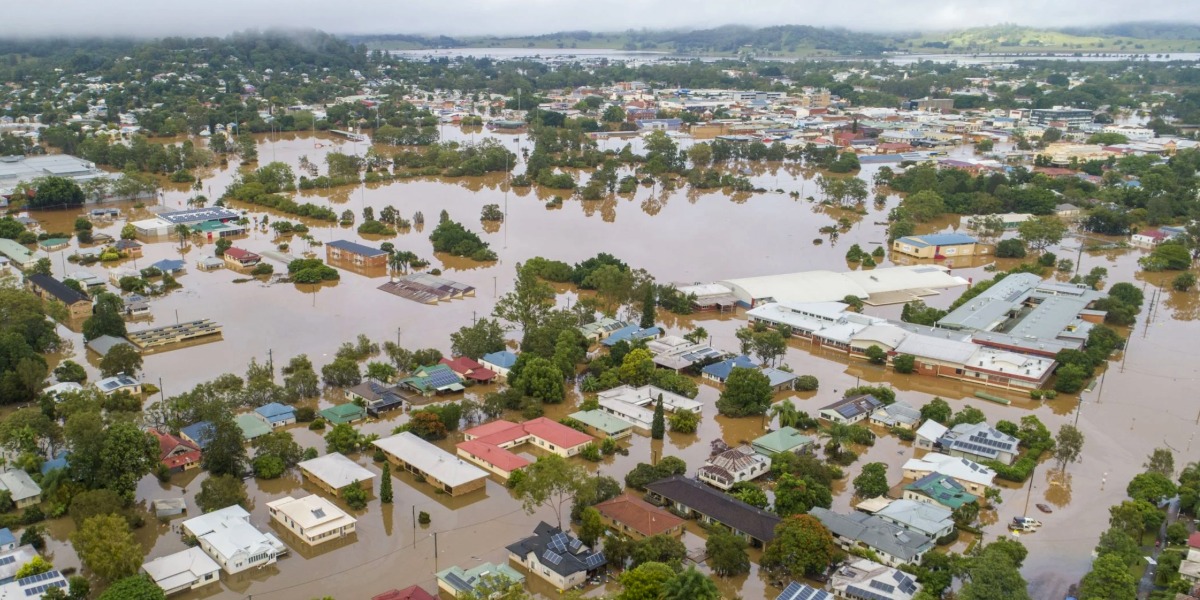
Four years after the record‑breaking flood that devastated Lismore in February 2022, the Northern Rivers community is today marking an anniversary many hoped would look very different.
The flood on 28 February 2022 reached a catastrophic 14.4 metres – the highest level ever recorded in the city – triggering a disaster that reshaped emergency management in New South Wales and left thousands homeless, traumatised, and searching for answers.
In the chaotic days and weeks that followed, extreme criticism was levelled at the official emergency response, particularly the stretched SES volunteer network and the absence of any clear plan to house thousands of displaced residents. There were fears for the mental and physical health of exhausted responders and the enormous strain placed on local coordination efforts.
Yet out of that turmoil emerged a new model for disaster recovery. Community‑driven initiatives, especially the creation of Resilient Lismore, became the backbone of the region’s long recovery. The organisation coordinated volunteers, repairs, donations, and local support at a scale previously unseen, ultimately influencing the redesign of NSW disaster‑adaptation protocols.
When Tropical Cyclone Alfred brought further flooding to the coast in March 2025, those lessons were put into practice. But it also revealed the slow pace of recovery in Lismore. Of the 644 properties with flood damage from the TC Alfred inundation, 97 of those had been affected by flooding in 2022 and not repaired, according to NSW Police Superintendent Scott Tanner, the NSW government’s recovery coordinator.
Just this week, on the eve of the fourth anniversary, the NSW Government announced the return of its $1 flood‑buyback house auctions for 2026, as well as announcing a caravan program to provide temporary housing after floods earlier in the week.
The Resilient Homes Program, introduced after the 2022 disaster to buy back flood‑affected properties and move them to higher ground, has so far acquired 130 homes. Many have already been resold for relocation at auction, with prices ranging from $1 to $200,000. Most buyers have been locals hoping for a rare affordable path to home ownership, although the need for a new ready‑to‑move site has now become mandatory.
Ten more homes from South Lismore, East Lismore and central Lismore will go under the hammer on 3 March at the Lismore Workers Sports Club, with another 10 listed for a Murwillumbah auction on 17 March.
Minister for Recovery Janelle Saffin said the program is not just about moving buildings, but protecting the region’s character.
“We aren’t just auctioning houses; we are saving the ‘tin and timber’ soul of the Northern Rivers.
“These auctions give local families—especially those starting out—a rare, affordable shot at home ownership while ensuring our region’s unique character is preserved for the future,” she said.
“It’s about moving our history to higher ground and giving these beautiful homes a second life in a safer place.”
For others, the milestone brings frustration and questions about why recovery has taken so long. Federal Member for Page Kevin Hogan released a blunt statement marking today’s anniversary, arguing that little meaningful progress has been made in flood mitigation or in delivering promised flood‑free housing developments.
“This weekend marks four years since the floods of February 2022. Australia’s biggest natural disaster,” he said.
“It will be close to six years after the disaster before a single home is delivered. The Reconstruction Authority was established to speed up this process. If this is considered a quick process, then something is clearly wrong.”
Hogan said businesses and residents still lack certainty and confidence.
“Important questions we need to ask. How many metres have been taken off the next flood? Do businesses in the CBD and industrial estates feel safer?”
He argued the slow recovery would never have been tolerated in the capital.
“I can’t help but think if this disaster had been in Sydney, thing would be happening much quicker.”
Further south in the Mid North Coast, hardest hit by the TC Alfred flooding, some of the same concerns persist. Nationals MP Tanya Thompson yesterday criticised the sluggish support for businesses still recovering from Tropical Cyclone Alfred nearly a year on, saying the Minister continued to take businesses for a ride over the $50,000 Recovery Grants for Small Businesses that have never materialised.
“Week on week we are hearing stories from business owners in their darkest hours continuing to be left without support as the Minns Labor Government neglects their duty to the Mid North Coast,” said Mrs Thompson.
“For the Minister to say an increase to the grants is still ‘a question of what’s needed’ after nine months of struggle is abhorrent.
“The Minister has seen the devastation firsthand, yet the Minns Labor Government continues to taunt business owners who are asking for certainty as they attempt to rebuild and recover.”
Intense flooding currently in the centre of the country is expected to make its way south to South Australia and Victoria in the next couple of days, but is a stark reminder that climate change fuelled extreme flooding, including in the middle of the desert, is part of the new reality.
For Lismore, resilient and proud, the new normal means building back flood ready.
Lismore City Council says they have rebuilt community buildings to withstand future weather events. Mayor Steve Krieg said 133 projects had been completed, including the full restoration of the Lismore Memorial Baths, City Library and Regional Gallery, with another 142 in active delivery.
“I know four years is a long time and we still have about another four years to go, but cast your mind back to the days immediately after 28 February 2022 and sight of the destruction as waters receded, you realise the enormous effort that has been put into our recovery by Council, the State and Federal governments, local business and residents,” he said.
“What has slowed our recovery was that we were the first in NSW to be hit by a disaster of such magnitude.
“Unlike in Queensland, there was no template, no road map – we had to figure it out as we went,” he said.
Since 2023, Lismore City Council has governed a $1 billion, state and federally funded flood restoration portfolio — the largest capital program of any local council in NSW — spanning 338 projects across water, roads and bridges, buildings, waste and resilience infrastructure. And, rather than treating recovery as a temporary surge in activity, Council made a deliberate decision to lift its institutional capability while rebuilding physical assets, delivering resilience through institutional transformation.
“We are a flood-prone town. That reality requires us to operate differently.”
“We have strengthened our procurement, governance and oversight systems, so disaster response becomes institutional capability, not a temporary reaction,” Mayor Krieg said.
North Coast Times is new! Connect with us by sending press releases to newsdesk@nctimes.com.au or enquire about advertising with us by emailing ads@nctimes.com.au.