

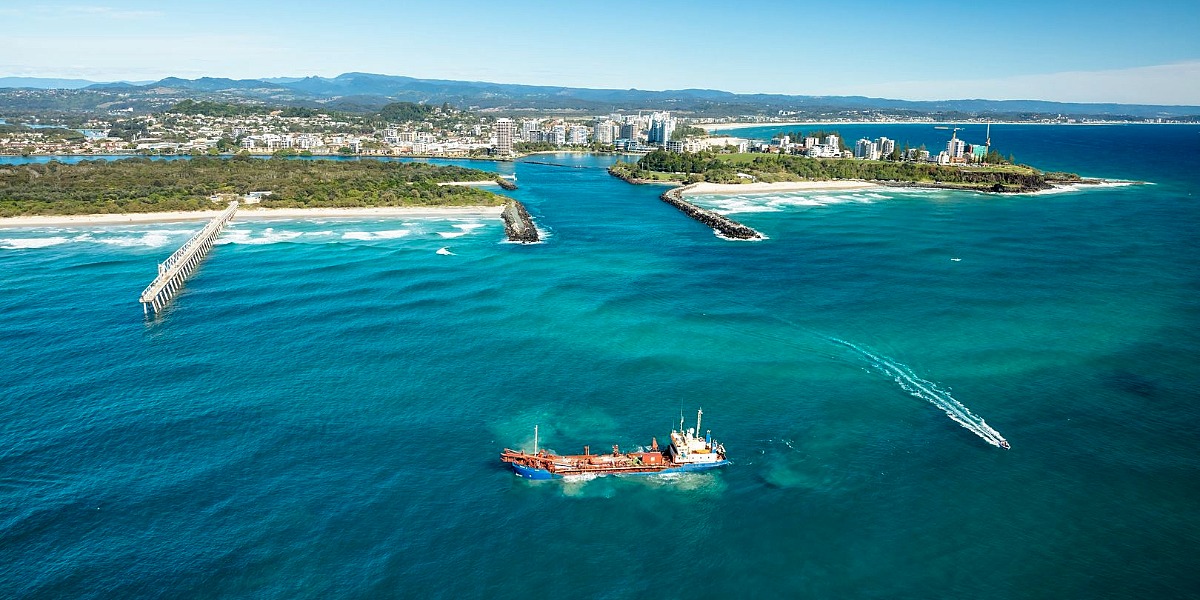
Annual dredging has begun at the Tweed River entrance, with authorities working to maintain safe access for vessels and support sand flow to nearby beaches.
The work forms part of the long-running Tweed Sand Bypassing project, a joint initiative between the New South Wales and Queensland governments aimed at keeping the river mouth navigable while maintaining coastal sand movement along the southern Gold Coast.
The project uses a sand transport system that collects sand from Letitia Spit on the southern side of the river entrance and pumps it beneath the river to outlets on the northern side.
Periodic dredging is also required to manage natural sand build-up at the entrance. The current campaign will see sand removed by dredge vessel and deposited offshore near Snapper Rocks, Duranbah, Bilinga and Fingal beaches.
Transport for NSW Maritime Acting Executive Director Darren Wood said the work is critical for both safety and local industry.
“Dredging of the Tweed River entrance supports the long-term viability of the local commercial fishing fleet and assists with safe passage for recreational boaters,” Mr Wood said.
“Our aim is to keep the Tweed River entrance navigable and deliver a long-term average of 500,000 cubic metres of sand each year through a combination of sand pumping and dredging to maintain sand supply to the Gold Coast’s southern beaches.
Up to 150,000 cubic metres of sand is planned to be dredged during the upcoming campaign.”
The dredging program is carried out under strict environmental controls and monitoring.
Boaters are being urged to exercise caution when navigating the Tweed River entrance during the works and to stay informed through Marine Notices.
Something going on in your part of the North Coast people should know about? Let us know by emailing newsdesk@nctimes.com.au