

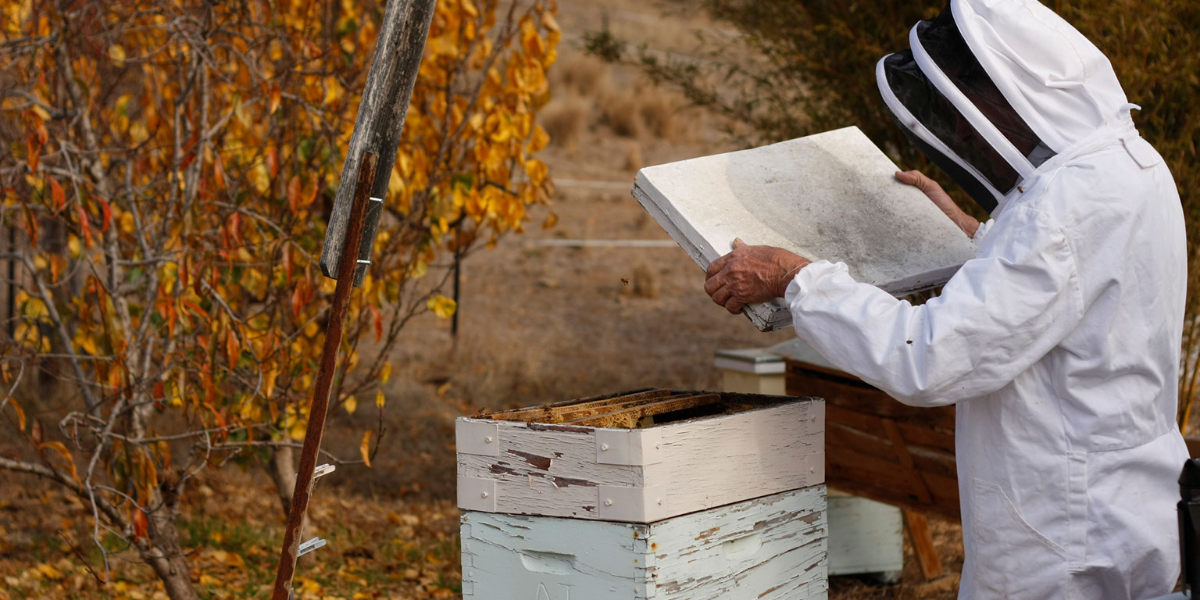
The deadly varroa mite tore through hives around Coffs Harbour and Kempsey more than three years ago. Now the state has officially given up trying to wipe it out, and bee and horticulture leaders are warning the cost of getting crops pollinated is about to bite even harder.
NSW has abandoned eradication of varroa destructor, the parasite blamed for wiping out entire bee colonies, and is shifting to long term management instead.
It has been more than two years since the mite reached the Mid North Coast. Some local beekeepers have already walked away from the industry, while others are still battling hives plagued by the parasite. It remains unknown exactly how many beekeeping businesses have shut up shop since varroa arrived in Australia, with a national survey now under way to find out.
As spring sets in, warmer weather raises the risk of the mite breeding up and reinfesting hives all over again.
The Coffs Harbour area was the epicentre of the outbreak. But it later emerged that Kempsey was just as likely to have been the starting point of the outbreak, rather than the Port of Newcastle, where the mite was first detected in a sentinel hive in June 2022.
A federal investigation into how varroa arrived on Australian shores has ruled out illegal importation but could not definitively confirm where the mite came from or how long it had been here before it was found. The NSW Department of Primary Industries and Regional Development and the CSIRO believe the incursion may have originated in Kempsey, or that it arrived in Kempsey and Newcastle around the same time.
The news of the permanent varroa problem and the challenge for those who rely on bees follows a recent ABC Landline report on the toll the mite is taking on pollination nationwide, including the disappearance of feral honeybee colonies that growers once relied on for free.
The NFF Horticulture Council and the Australian Honey Bee Industry Council (AHBIC) say it is time for growers everywhere to start paying for pollination instead of expecting it for nothing.
“For decades, a large share of horticulture’s pollination has come from feral bees that growers never had to think about, let alone pay for,” said Richard Shannon, Executive Officer of the NFF Horticulture Council.
“Varroa is steadily removing that invisible workforce.
“The growers who likely fare best from here will be the ones who treat pollination as a managed input, planned, budgeted and contracted, rather than something the landscape provides for free.”
AHBIC Chief Executive Officer Danny Le Feuvre said the fallout went well beyond beekeeping.
“This is not just a beekeeping problem, it is a national food production and resilience issue,” Mr Le Feuvre said.
“Beekeepers are doing everything they can to keep healthy, strong hives in the system, but they are now carrying permanent management costs and the added pressure of emerging chemical resistance.
“Growers and beekeepers are in this together, and securing pollination for Australia’s horticulture industries depends on us planning side by side.”
The two councils will co-host a national webinar on managing pollination in a varroa-endemic Australia, running from 12pm to 1.30pm AEST on Wednesday, 5 August, covering what the end of the Transition to Management program means on farm. Register for this event here.
Got something you want to say about this story? Have your say on our opinion and comment hub, North Coast Times Engage