

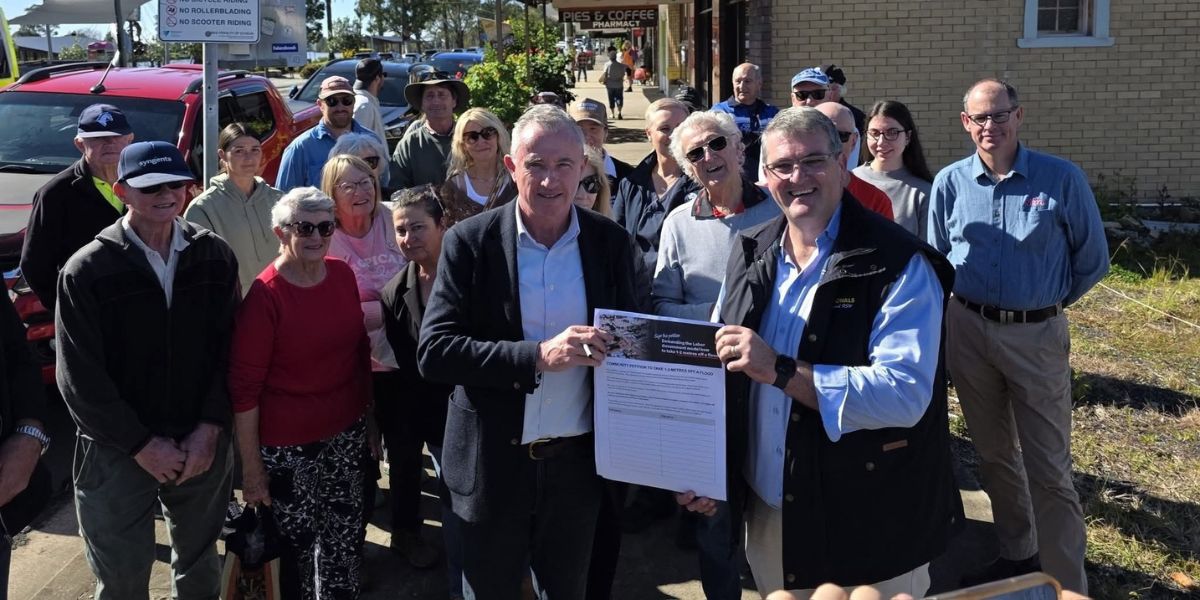
Communities across the Northern Rivers should be at the centre of the next phase of flood resilience planning, following the release of the landmark CSIRO Northern Rivers Resilience Initiative report, says State Nationals MP for Clarence Richie Williamson.
Williamson said the report provided governments with an unprecedented scientific evidence base to help reduce the impacts of future flooding and improve long-term resilience for local communities.
“This is arguably the most comprehensive flood mitigation study ever undertaken in Australia and certainly the most significant piece of work our region has seen since the devastating 2022 floods,” Williamson said.
“For the first time, we have sophisticated, catchment-wide modelling backed by world-class science demonstrating that strategically located flood mitigation infrastructure has the potential to substantially reduce flood levels, flood depths and flood inundation across the Richmond River catchment.
“The report confirms that major floods cannot be prevented, but importantly it shows their impacts can be significantly reduced through carefully planned flood mitigation measures.”
The report’s findings are expected to help guide future decisions on flood mitigation infrastructure, with the Australian and NSW governments today announcing $3 million to begin feasibility and detailed enabling studies.
Williamson welcomed the funding but said communities expected governments to maintain momentum and deliver long-term investment.
“I welcome the commitment of $3 million to begin the next stage of work, but we need to be honest – this is a drop in the ocean when measured against the scale of what this report represents.
“This report has taken four years to produce. It cannot simply be placed on a shelf. The question now is: how do we turn this report into action?
“The level of government investment that follows must reflect the magnitude of the evidence that has now been placed before us.”
Williamson said the CSIRO modelling demonstrated that strategically located flood detention structures and other mitigation measures could substantially reduce flood peaks and floodplain inundation across a range of historical flood events, while identifying opportunities for further investigation of additional detention sites.
“The science is telling us there are practical options that deserve serious consideration,” he said.
“The report also makes it clear that while the modelling is robust, detailed design work, environmental assessments, cost-benefit analysis and business cases are now required before construction can commence.
“That is exactly why today’s funding announcement is important, but it is only the beginning.”
Williamson said delivering meaningful outcomes would require governments, councils, industry and local communities to work together throughout the next stage of planning.
“This cannot become another government-only exercise. Local councils, landholders, businesses, community groups, engineers, environmental experts, builders, the insurance industry and residents all deserve a seat at the table as these next stages unfold.
“If we get this right, the benefits extend far beyond flood protection. Lower flood risk improves community confidence, encourages investment, supports housing growth, helps keep insurance affordable and gives families greater certainty about their future.”
While the modelling focused on the Richmond River catchment, Williamson said the findings would also help inform resilience planning across neighbouring catchments, including parts of the Clarence Valley.
“Our region has lived through unimaginable devastation. We owe it to every family, every business owner and every community that suffered during the 2022 floods to ensure this extraordinary body of scientific work becomes the foundation for long-term flood resilience.
“This report gives governments an opportunity we simply cannot afford to waste.”
Don’t miss any of the important stories from around the region. Subscribe to our email list.