

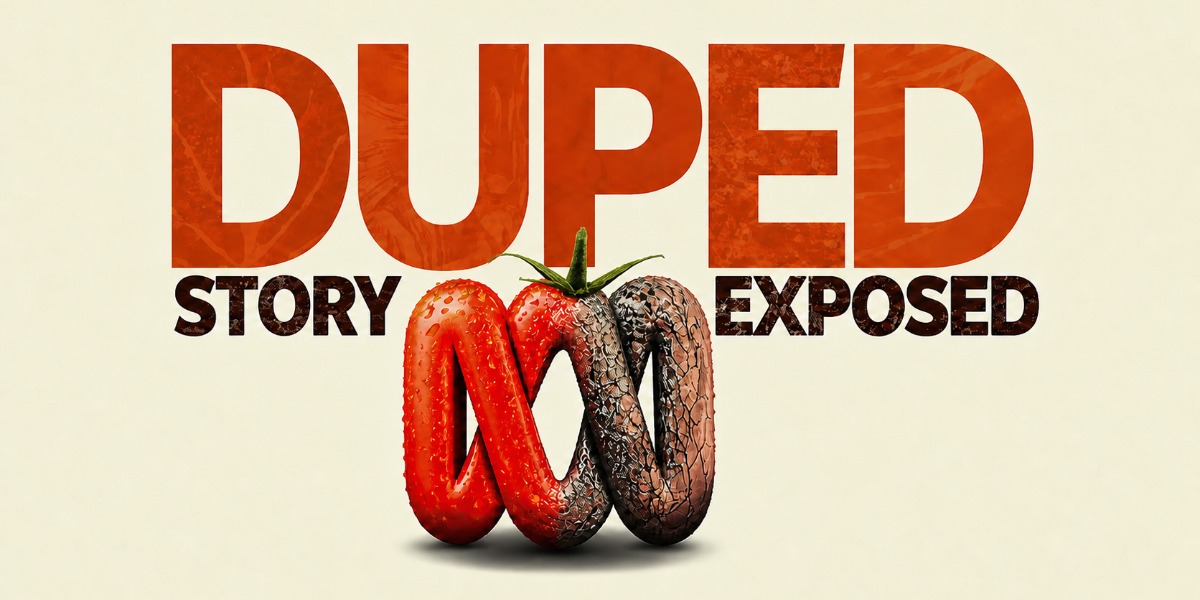
In a well promoted series on the flagship program Four Corners, the ABC made a series of damning claims that have caused significant distress and affected consumer confidence about the food we eat.
But the food industry has also been reeling, because there was so little evidence to back up the alarming claims, and some of them simply are not true.
Worse still, the story was largely copied from a BBC investigation, and the ABC knew there was a problem with the claims prior to broadcast.
Duped: Food Exposed aired across two parts in late July and early August, promising to reveal “one of the largest public food investigations ever undertaken in Australia” and asked “can we trust the labels on your favourite foods?”
The claims were sweeping. The evidence, on close inspection, is much thinner than the program let on.
Duped into fearing our food
In the first part of the program, reporter Adele Ferguson and forensic lab Source Certain tested tomato paste, turmeric, eggs, seafood and alcohol, and concluded that roughly one in four tomato products, three of four turmeric brands, and a Woolworths branded “cage free” egg line had failed to verify their product claims of ingredients or source of origin. It also raised issues with seafood, and adulteration in imported products. It also criticised marketing and labelling practices as ‘duping’ consumers.
In the second part of the program, further claims are made about worker exploitation in well known trouble spots including cocoa production in Ghana and fruit picking in Coffs Harbour, but did not directly connect the claims and testimony of illegal workers to any product. It also repeated the claims about tomato products.

Food scientist and nutritionist Dr Anneline Padaychyee described the program as “incomplete fearmongering”.
“Food fraud is not a new thing, it’s a tale as old as time.”
Dr Padaychyee said the picture painted by the program bore little resemblance to an industry she has worked in for years.
“It came across like we’re all just in this one big thing together to try and lie and cheat, and we don’t have any processes in place to try and do the right thing, and we’re all corrupt.”
“That’s not true at all.”
“Australia’s food supply is the most regulated in the world,” Dr Padaychyee said.
Dorrigo based food consultant Leanne Singleton said she doesn’t disagree with the issues raised, but there is further context needed in the debate.
“Food fraud and authenticity is both an Australian and global challenge.”
“Our food supply networks are highly complex, interconnected systems that produce, process, store, transport, distribute and deliver food from origin to consumer,” Ms Singleton said.
“This complexity makes acts of food fraud harder to detect and when it is identified, there is no regulatory authority to undertake proactive monitoring to detect fraud or to investigate and prosecute known cases.”
Dr Padayachyee also welcomed the discussion on the issues, but emphasised the importance of accuracy, saying she has been answering many questions for worried friends and relatives.
“If you’re going to do something like this it’s important to be extremely accurate because food is the one common denominator we all need.”
“We all have to rely on supply, and so if it’s not helping productively, it’s just adding additional stress and anxiety,” she said.
Copy and paste
Much of what aired in Duped: Food Exposed followed the same story line as an investigation by the BBC in December 2024. That investigation, Blood on the Shelves: The Secrets of Xinjiang’s Tomato Industry, and the accompanying BBC News report, tested tomato purees sold in the United Kingdom, Germany and the United States and, using the same Australian firm, Source Certain, concluded that a share of them likely contained tomatoes grown in China’s Xinjiang region, a region flagged internationally over the use of forced Uyghur labour.
As in the Australian Duped program, every single company accused of using Chinese tomatoes in the BBC investigation on the basis of Source Certain testing rejected the allegations.
However, the BBC program was much more tightly produced, and the clearest pieces of evidence the BBC obtained were an undercover recording of a representative from Italian processor Petti, who said the company could source cheaper tomatoes from China if the client wanted to, and the presence of distinctive blue vats of tomatoes from Xinjiang province on a production site. For the BBC program, the Source Certain data was just one piece of evidence – and it wasn’t the smoking gun.
Two years on, a different reporter, a different country and exactly the same lab produced the same story, with the same complete rejection of the claims from the companies involved, but Four Corners did not have any conclusive, irrefutable evidence like the blue vats. They only had the testing by Source Certain – and no smoking gun.
The ABC program also went much further than tomatoes, with along list of claims and allegations, on different products and different issues in the food system and regulation.
Source Uncertain
The lab the program leans on most heavily for its central claims, Source Certain, is a Perth based lab that uses scientific origin verification to analyse the chemical composition of products. Its methods, Trace Element Analysis (TEA) and Stable Isotope Ratio Analysis (SIRA), compare the trace mineral and isotope composition of a product against reference databases to estimate where it was grown.
Source Certain is not registered with NATA, the National Association of Testing Authorities, and is not a laboratory recognised by Food Standards Australia New Zealand (FSANZ), the body responsible for setting the food standards Duped accuses Australia of failing to enforce.
A Source Certain spokesperson confirmed the company does not hold NATA accreditation for provenance testing, but said NATA was one way of demonstrating specific lab methods, not the only measure of scientific validity.
Dr Padaychyee said the correlation between the program’s tone and the lab’s lack of accreditation was itself telling.
“It came across as a documentary that you just can’t trust our food system, and you cannot trust our regulators, and you cannot trust our food policymakers, and you definitely cannot trust FSANZ,” Dr Padaychyee said.
“And then you go and dig, and you find out that this lab is not FSANZ recognised. Well, of course, because they’re not part of the system.”
Dr Padaychyee said there were limits of what the kind of testing done by Source Certain could prove.
“This soil content gives you kind of like a DNA footprint everywhere in the world,” Dr Padaychyee said.
“That said, we can manipulate soil content with the use of fertilisers, which in Australia we kind of have to.”
“So to have one lab testing and saying definitively this is where it’s come from, from this particular region in China, 100 per cent?”
Coles made much the same point. Their information was that the reliability of the testing method “depends on the quality, breadth and relevance of the reference samples used,” with inputs such as fertiliser able to shift a product’s isotope profile independently of where it was actually grown.
“Coles has also been made aware that the origins of inputs such as fertiliser and pesticides can affect the trace element and stable isotope testing,” a Coles spokesperson said.
“For example if growers use urea as a fertiliser, this is a globally traded commodity which could originate from China and thus affect the isotope profile of the tomatoes.”
Significant disruption in fertiliser supply chains due to conflict in Ukraine and Iran also mean that it is likely testing will have different results to reference samples if those reference samples have not been collected recently.
Source Certain acknowledged that fertiliser and feed inputs can influence a product’s elemental profile, but said this was not a flaw in the method.
“Understanding and accounting for this variation is fundamental to how origin evaluation works,” the spokesperson said. “This variation is accounted for in our testing process.”
The ABC knew they had a problem
Coles, Woolworths, Leggo’s and other companies named by the program have refuted the claims in the strongest possible terms. Many of them have told this masthead that the ABC refused to provide them with the underlying data, batch numbers or analytical framework behind the findings of Source Certain, or give them time to get another lab to retest and confirm or disprove the findings of Source Certain.
“To date, while Four Corners and Source Certain have provided general information about their methodology, they have not provided Leggo’s with access to the underlying testing data, analytical framework or detailed results underpinning their findings,” a Leggo’s spokesperson said. “Without this information, it is not possible to assess the accuracy of those findings.”
A Woolworths Group spokesperson said the retailer had “requested all information on methodology and results of the Source Certain testing, including batch details to allow us to investigate further.” An independent egg industry professional said that it was possible to test for whether eggs were free range or not, but they knew of no method for testing that could distinguish between barn (or “cage free”) and caged eggs.
Multiple industry insiders said they had heard of extended, and increasingly frustrated, discussions between various companies and the ABC in the weeks before broadcast, as they tried to establish how the network had arrived at its results. They say the ABC did not accept the documents and evidence supplied by food producers before the program went to air.
Leggo’s is, understandably, the most furious of the companies named. Most of the tomatoes processed at its Echuca plant in Victoria are sourced from growers a short distance from the factory, across northern Victoria and southern New South Wales.
“Our records confirm the tomatoes used in all our products labelled ‘Australian-grown’ are grown right here in Australia,” a Leggo’s spokesperson said.
“We have verified this by tracing the relevant products to their date of manufacture, the individual tomato paste inputs used in production, the supplier’s verified records of those inputs, and down to the very paddock locations where the tomatoes were grown.”
“Notwithstanding our complete confidence in our supply chain, we have commissioned an independent audit to confirm our internal records and further assure our customers and stakeholders.”
Coles said it had “no evidence that Chinese tomatoes, including tomatoes from Xinjiang, were used in the Coles Italian Tomato Paste products identified by Four Corners” and would also commission its own independent testing.
“We strongly reject any suggestion that Coles knowingly misled customers, engaged in food fraud or profited from food fraud,” a Coles spokesperson said.
Some of the claims in the program have been rejected as false by the regulator. The NSW Food Authority has ordered the correction of a claim made in the first episode that horse meat had been found in food for human consumption. The regulator says there are no abattoirs in NSW licensed to process horse meat for human consumption, and that the confidential documents the claim was drawn from related to an illegal knackery supplying pet food to the greyhound industry, not human food.
Food fraud is real, but that’s not food fraud
All of the experts we spoke too agreed that food fraud is a real problem and one the community should be talking about. However, Duped repeatedly blurred food fraud with other issues in the food production system, which are not food fraud or deceptive conduct.
Food fraud has a precise definition: “the deliberate and intentional substitution, addition, tampering, or misrepresentation of food, food ingredients, or food packaging; or false or misleading statements made about a product for economic gain.”
The clearest example of the program’s misrepresentation was its treatment of dairy contamination in coconut water products made by Cocobella and Raw C, marketed as dairy free, presented in the program as evidence of poor labelling and how the “food system is failing the consumer”. Both companies had apologised to their customers for the unintended contamination and revised their processes, and given detail to the program on what had gone wrong.
A NSW Food Authority spokesperson said the presence of undeclared allergens was a serious safety risk but did not necessarily constitute a deliberate act of food fraud.
“Where undeclared allergens are detected, the focus is on taking appropriate action to mitigate the risk to consumers such as a product recall,” the spokesperson said.
“Where there is evidence of intentional adulteration, this is investigated and where necessary appropriate regulatory action is taken.”
The program portrayed recalls as happening “almost once a week due to an undeclared allergen”. There were just 92 recalls in 2025 Australia wide, 35 of the related to undeclared allergens. Recalls are considered evidence of the system working, not failing.
FoodSure principal Leanne Singleton, a Dorrigo based food consultant who specialises in food safety and food waste, said whether a contaminant is evidence of food fraud or a food safety issue depends on intent, not just outcome.
“As a long-standing food safety professional, I don’t disagree with the issues raised, however there is further context to explain the overlap between economically motivated adulteration (EMA) and the presence of unexpected or undeclared food allergens.”
EMA is a common type of food fraud. It occurs when someone intentionally leaves out, takes out, or substitutes a valuable ingredient or part of a food. EMA also occurs when someone adds a substance to a food to make it appear better or of greater value.
“The trace dairy contamination could be a case of food fraud depending on how the contamination occurred and the motivation behind it,” Ms Singleton said.
“If it was an accidental allergen cross contact by a manufacturer who also handles dairy products in their factory, then this is food safety incident rather than a food fraud issue.”
Ms Singleton said that considerably more effort is required to be able to have a ‘free from’ claim in relation to allergens on the label, and that deceptive actors avoid further testing.
“A food business making a “free from” claim needs to be able to substantiate the claim. In best practice situations, this is normally done through a robust allergen management program, rigorous supplier verification, ingredient declarations, validated cleaning processes and product testing to confirm the absence of the particular allergens.”
“If an adulterant has been intentionally added by a supplier, or someone else in the supply chain, the manufacturer is not likely to test for the adulterant because they don’t expect it to be present. This is the intent of EMA – to hide it well enough so you don’t get caught!”
The program’s treatment of sugar content followed a similar pattern of making alarmist claims implying deception where none existed. For example, Duped highlighted a product marketed as “99 per cent fruit” that indicates 63 per cent sugar on its nutrition panel, framing the discrepancy as “proof labelling laws are failing us”.
Dr Padaychyee said the claim reflects a misunderstanding of basic nutrition, not a hidden scandal.
“It’s not just sugar in the yogurt that’s being accounted for on the back of pack, it’s also lactose, which is naturally present in milk, and fructose which is naturally present in fruit,” Dr Padaychyee said.
“The difference between sugar and sugar and sugar is something consumers don’t understand, and it’s easy to play on that fear and that lack of understanding.”
The second part of the program did not attempt to make a substantive connection between worker exploitation within fruit picking in Coffs Harbour to any product. While modern slavery is a very serious issue, it would only meet the definition of food fraud if there was a product claiming to be ethically produced or free from slavery.
Who can you trust?
The core allegation of Duped: Food Exposed is that you cannot trust the food chain. But the credibility of Four Corners’ own sourcing has come under intense scrutiny in the same fortnight the program aired.
The ABC pulled two other recent Four Corners episodes, Meth Highway and Cocaine Nation, after concerns were raised by others and Media Watch investigated the veracity of sources used by reporter Mahmood Fazal, a former member of a criminal motorcycle gang turned journalist. The ABC’s head of investigations and current affairs, Jo Puccini, who oversaw Four Corners, quit her role this week as the review into Mr Fazal’s work continues.
Some of the sources relied on in Duped carry their own, separate, credibility questions. Source Certain’s own accreditation status, outlined above, is one such question.
Former SPC chairman Hussein Rifai, whose undercover investigation of Italian tomato suppliers formed a centrepiece of the first episode, is currently being sued by SPC over allegations he misused company funds, including on unauthorised credit card spending and airfares. He resigned from the SPC board in November 2025.
Min Sheen Tan, a former food technologist turned website developer who featured in the program discussing misleading claims in the food industry, has recently put out a book on the same subject, For F**ds Sake. Much of what he told the program closely mirrors the promotional material for his self-published book.
Even the program’s use of confidential NSW Food Authority documents, obtained by NSW Greens MLC Abigail Boyd through a parliamentary process, has been criticised by the Authority itself as misrepresented. The NSW Food Authority has said Ms Boyd’s suggestion that horse meat had been found in food for human consumption was false, and has called on the ABC to correct the record. The ABC has updated the headline and lead paragraph from the online story, but the insinuation remains in multiple formats of the program.
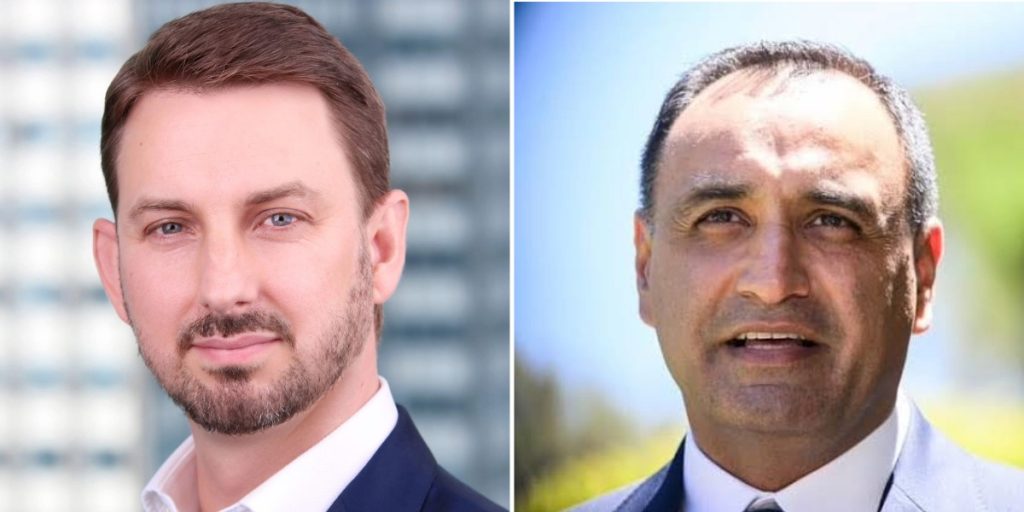
The credibility of NSW Anti-slavery Commissioner James Cockayne, a key source for the program’s second episode, has also been called into question after the active member of NSW Labor launched an extraordinary personal attack on NSW Nationals leader and Member for Coffs Harbour Gurmesh Singh, alleging his complicity in modern slavery. Mr Singh has demanded an apology.
There were experts the program could have spoken to and did not. Dr Padaychyee said she was surprised more independent food scientists and consultants were not approached.
“I know for sure, one hundred per cent, there are some people in this country that have extremely deep knowledge in all these different things that were being spoken about,” she said. “It was a surprise that they weren’t interviewed.”
Damage likely to be irreparable
The damage to company and brand reputations, as well as to the nation’s confidence in food systems, is hard to quantify. Legal action is likely, particularly given the extensive efforts the various companies went to in order to make their case that the Source Certain results were not right. The Australian Competition and Consumer Commission (ACCC) has now announced it will look into the claims.
“It is important that consumers can be confident that any claims made on food labelling, packaging and in advertisements are truthful, accurate and not misleading,” said ACCC Commissioner Luke Woodward.
“We know that consumers may be guided by non-price factors, including claims about the country of origin or supply chain, when choosing which food products to buy.”
But even if the ACCC finds that the food companies are right, and the ABC has done it wrong, the damage will not be undone.
The Federal Government has welcomed the ACCC’s probe, with Assistant Minister for Competition Dr Andrew Leigh acknowledging the concerns created by the program.
“Australians deserve confidence that the products they purchase are accurately advertised and that they are getting exactly what they pay for,” he said.
“These allegations have understandably caused considerable concern.”
The ABC has not responded to multiple questions and requests for comment.
Got something you want to say about this story? Have your say on our opinion and comment hub, North Coast Times Engage