

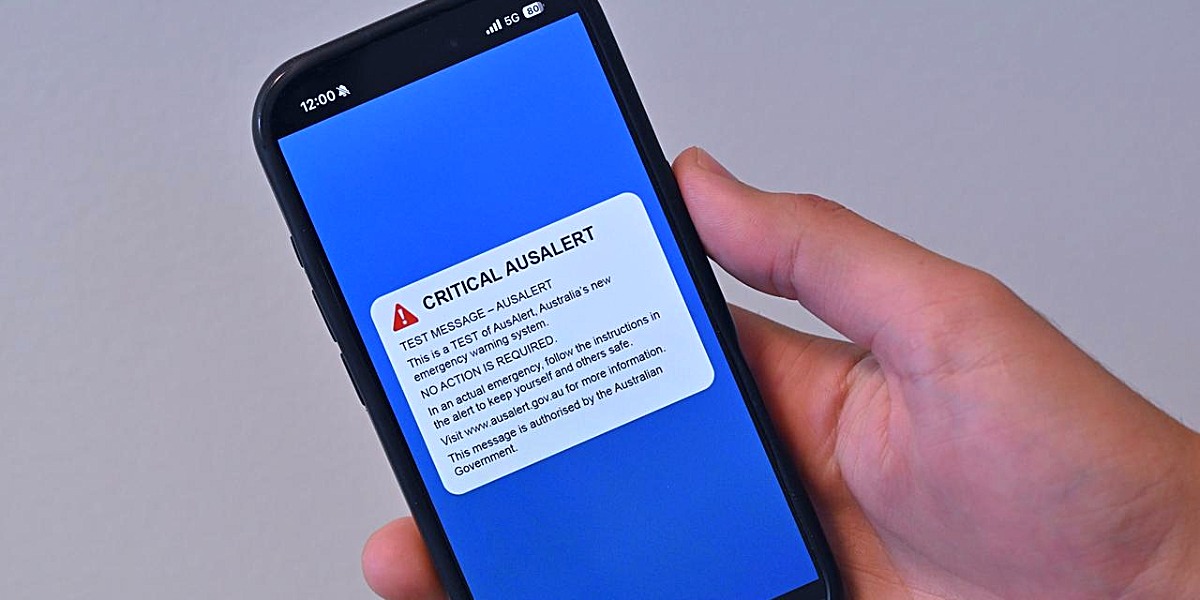
The nationwide test of Australia’s new emergency warning system may have unintended impacts on people affected by past disasters, according to the lead investigator of Southern Cross University’s climate-related PTSD clinical trial.
At 2 pm on Monday, 27 July, most smartphones, smartwatches and tablets across Australia will emit a loud emergency alert as part of a nationwide test of the Australian Government’s AusAlert system. Compatible devices will vibrate and sound a siren-like warning for about 10 seconds, even if they are set to silent or Do Not Disturb.
For most Australians, the test will be a minor inconvenience. However, the alerts are intended to play a critical role in helping communities receive timely warnings during emergencies such as floods and bushfires.
Associate Professor Janet Schloss, Principal Investigator of the HEART Trial at Southern Cross University, supports the development and testing of a robust national warning system but says the test may affect people with a history of trauma.
“I believe the planned national emergency alert system test may evoke a range of responses among individuals with trauma histories. For some, an emergency alert tone may trigger memories of past floods, bushfires, evacuations, or periods of threat. These reminders can lead to temporary increases in anxiety, heightened vigilance, distress, or stress responses,” she said.
Associate Professor Schloss said the potential for anxiety and stress is heightened by the fact that many people in the NSW Northern Rivers remain homeless or displaced more than four years after the devastating floods of February and March 2022.
“Many people are still experiencing homelessness, displacement, and limited access to reliable mobile coverage and internet,” she said.
“For these individuals, being told an alert will be sent and then not receiving it may be distressing. Some may recall missing warnings during previous flood events and interpret the absence of an alert as a system failure, potentially reactivating feelings of fear, vulnerability, abandonment, or mistrust.”
While acknowledging there is no practical alternative to testing the system, Associate Professor Schloss encouraged people in disaster-affected communities to support one another.
“Tell friends, family and neighbours that the test is happening on Monday and why. Advance notification of the test may provide benefits. Knowing when and why the alert will occur may help individuals feel more prepared, restore a sense of predictability and control, and reinforce the role of emergency warning systems in protecting community safety.
“In saying that, even with warning, it could still be triggering for some people. I encourage people to be sensitive and kind to others in the coming days.”
Tips for managing anxiety about the test
- Remember its purpose: Australia is testing its new national warning system, AusAlert.
- Be prepared: Let family, friends and neighbours know to expect the alert.
- Look out for others: Some people in the community may find the alert distressing.
- Know what to expect: Compatible devices will vibrate and sound a loud siren-like warning for about 10 seconds. If you do not receive the alert, your device may not be compatible or may require a software update.
- No action is required: The alert is only a test.
More information, including test times for each state and territory, is available at https://www.ausalert.gov.au/.
Like what you’re reading? Support North Coast Times by making a small contribution today and help us keep delivering local news paywall-free. Donate now