

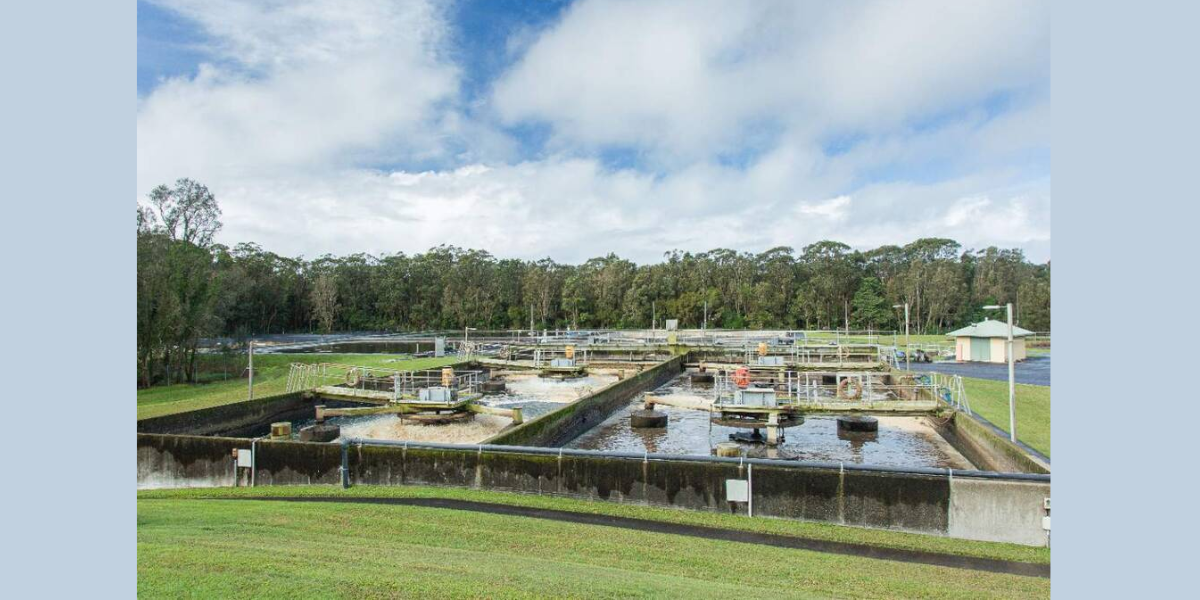
After more than two years of engineering studies and community consultation, the Tweed Coast finally knows how its Hastings Point sewage treatment plant will be fixed.
Tweed Shire Council has voted to back Option 4, the Advanced Intermittent Process (AIP), for the Hastings Point Wastewater Treatment Plant (WWTP) performance upgrade.
The plant handles wastewater for around 12,860 residents and visitors across Cabarita Beach, Bogangar, Hastings Point, and Pottsville.
The upgrade aims to fix existing reliability problems, meet strict NSW Environment Protection Authority (EPA) licence limits, and cope with the crush of busy holiday peaks.
Councillors made the call on Thursday, 19 November, choosing the AIP design over the other shortlisted contender, Option 5, a Membrane Bioreactor.
“We know how deeply our community cares about our coastal waterways, beaches and local environment and we thank everyone who took the time to review the project details and share their feedback,” said Tweed Shire Mayor Reece Byrnes.
Mayor Byrnes said both shortlisted options had been put through the same tough test.
“Independent consultants engineered both shortlisted options to meet strict NSW EPA standards and resolve past performance and reliability issues at the plant,” he said.
“Council’s decision balances long-term environmental protection and operational resilience with financial responsibility for our ratepayers.”
So what is the plant actually getting?
“Option 4 modernises the plant by adding a third aeration treatment tank, new inlet equipment, improved hydraulics, better operational controls, updated decant and filtration systems, an odour-control system, a 99kW solar array and aesthetic and noise improvements,” said Council’s Director Engineering Tim Mackney.
Mr Mackney said the design would upgrade ageing infrastructure and make the plant perform much better day to day, as well as stand up better to natural events.
For locals, the payoff is meant to show up when it matters most.
“For the community, this means a far more reliable plant especially during heavy rain and busy holiday periods, consistently cleaner treated water that meets strict NSW EPA limits and strong protection for local creeks and coastal groundwater,” Mr Mackney said.
“This aligns closely with community feedback calling for long-term coastal resilience.”
The cost to ratepayers was also front of mind.
“Importantly, Option 4 delivers these strong environmental outcomes while keeping construction and ongoing running costs more affordable for ratepayers,” Mr Mackney said.
Treated water will keep going where it goes now: into the existing dune disposal system.
“Either upgrade option would have continued to utilise the existing dune system; however, the upgraded plant will better protect the dune system through higher treatment quality and improved reliability,” Mr Mackney said.
But the long-term future of the dunes remains an open question.
“A separate study has also been proposed to look at the long-term operation and sustainability of the dune disposal system, particularly considering potential climate change impacts,” he said.
“Once upgraded, the plant will also be far more adaptable if Council moves to different ways of releasing treated water in the future.”
Locals with serious expertise had a big hand in getting the project to this point.
The independently chaired Hastings Point WWTP Consultative Committee, set up in June 2025, brought together five qualified local community representatives with backgrounds in civil engineering, environmental science, finance, and governance, alongside Council staff.
The committee helped shape how the options were judged. It made NSW EPA compliance a strict pass or fail test, and gave extra weight to environmental protection, community amenity, and system resilience in the Multi-Criteria Analysis.
It also reviewed feedback from the August to September public exhibition, which drew 78 survey responses and eight detailed written submissions, before it went to councillors ahead of the vote.
During the four-week exhibition on Your Say Tweed, Council also briefed local community associations, attended a Pottsville Community Association meeting, and ran pop-up stalls at local markets and events.
It has been a long road.
Engineering firm GHD assessed five initial upgrade options in 2024, with a peer review by Beca Hunter H2O. That report went on public exhibition in May and June 2024.
In February 2025, after community feedback, Council narrowed the field to Option 4 and Option 5 for deeper engineering investigations.
Beca Hunter H2O then carried out specialist environmental studies, population and holiday load modelling, geotechnical investigations, and noise and odour assessments.
Councillors weighed its final Concept Design and Options Assessment Report, strategic advice from the consultative committee, and community feedback before making their decision.
Don’t expect diggers on site just yet.
The project now moves into the planning approvals phase in early 2027. That includes environmental impact assessments and supporting studies, followed by NSW Government approval.
Detailed design and construction will follow from the second half of 2027.
For more information, visit yoursaytweed.com.au/projects/hastings-point-plant-upgrade.
Got something you want to say about this story? Have your say on our opinion and comment hub, North Coast Times Engage