

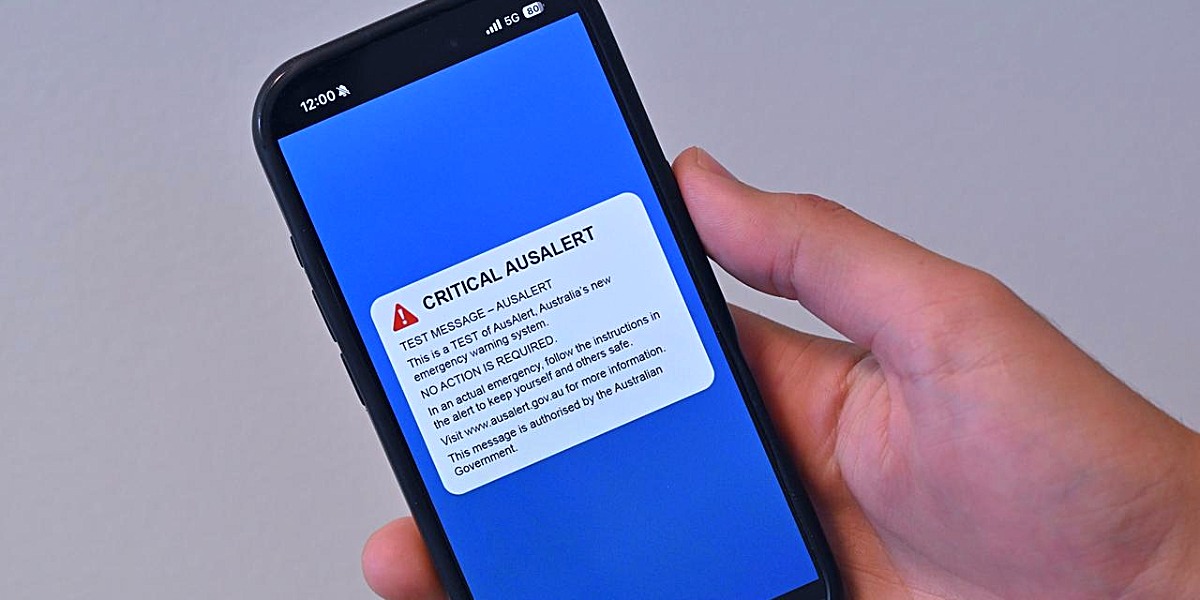
Not all states and territories are sold on adopting a national emergency warning system for Australia’s high-risk weather season.
Mobile phones around the country will blast out a 10-second siren on Monday as part of a nationwide test of Australia’s new emergency warning system.
The AusAlert system will come online in October, aiming to provide more targeted emergency warnings for bushfires, floods and other natural disasters.
But some jurisdictions will continue using their own warning systems once AusAlert is rolled out, federal Emergency Management Minister Kristy McBain revealed on Wednesday.
It would be up to each state and territory government to decide if it would allow the new AusAlert system to operate alongside their state-based programs.
“I’m sure that they’ve all got varying views on what they may need to do for this high-risk weather season,” she told reporters at Melbourne’s State Control Centre.
Ms McBain will meet with her state and territory counterparts on Wednesday to discuss the new system.
Among the cohort is Queensland Emergency Services Minister Dan Purdie, who hoped to address concerns about how the system would serve regional communities.
The Crisafulli government supported the technology, but questions remained about how those relying on landlines would be contacted, he said.
“Some states (have) indicated they might at this point be reluctant to roll it out,” he said.
“We’ll know more today after answering these questions.”
The AusAlert system will allow text and audio alerts to be sent to most active mobile devices across the country, and eventually be extended to landline phones via automated voice.
Regional and remote communities, which are more likely to rely on landlines, may still be able to receive alerts through state-based warning systems.
Concerns have also been raised that those who keep a hidden phone, including women living in situations of domestic abuse, could be exposed by the test.
During a critical alert, compatible phones will play a loud siren even if they’re on silent or switched to do not disturb.
The National Emergency Management Agency has consulted with Australia’s peak domestic and family violence services body Wesnet on the potential risks.
Karen Bentley, chief executive at Wesnet, advised vulnerable people to switch their phones off or onto aeroplane mode one hour before Monday’s test at 2pm AEST.
Ms McBain said all nine previous local tests of the AusAlert system had been successful and denied state-based and national alerts operating simultaneously may cause confusion.
“People want as much information as possible,” she said.
If you need help or are upset by this story, please seek support.
- 1800 RESPECT 1800 737 732
- Lifeline 13 11 14
- 13Yarn 13 92 76
- Beyond Blue on 1300 224 636
- Kids Helpline on 1800 551 800
- Headspace on 1800 650 890