

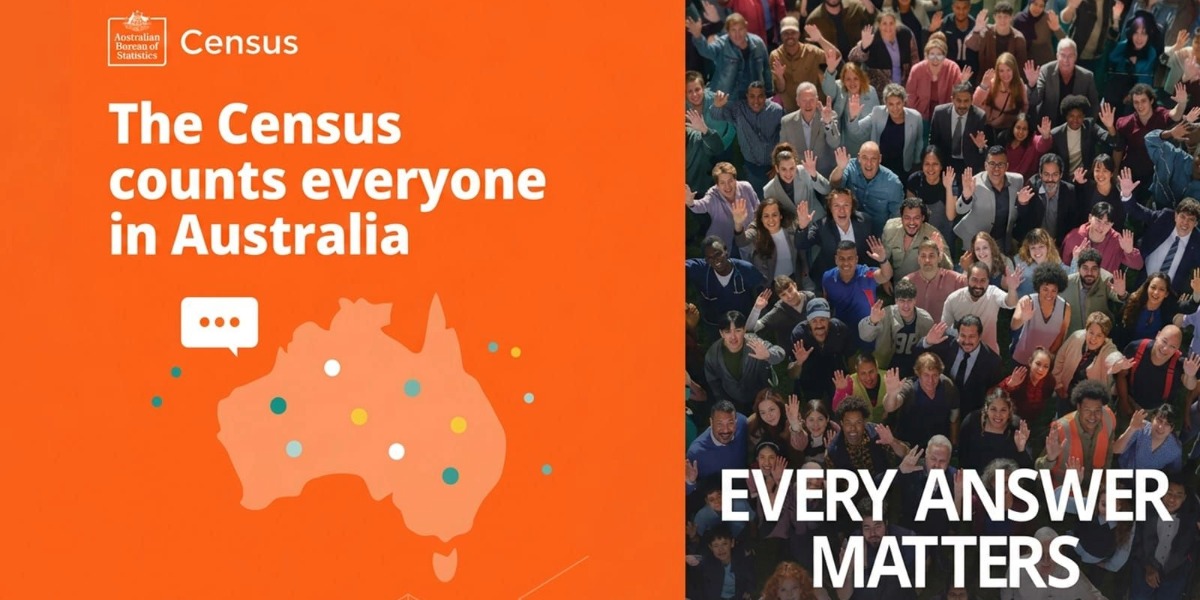
Tonight is Census night, and anyone who hasn’t received their instructions can still take part, but a University of Newcastle researcher says an accurate count matters for more than just government funding formulas.
Held every five years, the Census captures a snapshot of who Australians are and how communities are changing. Anyone who has not yet received an instruction letter or paper form can go to census.abs.gov.au to get a Census number and complete it online, or call the Census Contact Centre on 1800 181 227 to request a paper form. Help is also available at pop-up hubs across the region.
The Australian Bureau of Statistics said more than five million household Census forms had been received by 10am on Tuesday, both online and on paper.
Emily Walter, Census national spokesperson, said while many households had completed their Census, those who hadn’t were being urged to do so as soon as possible.
“While many households have completed their Census, we’re urging those who haven’t to do so as soon as possible,” said Emily Walter, Census national spokesperson.
Laura Eadie, Executive Director of the University of Newcastle’s Institute for Regional Futures, said that her research, like most social research, leans heavily on Census data, and a poor count would leave gaps in the bigger picture her team relies on.
“We need both the structure and the insight into experience,” Ms Eadie said.
“Where it becomes really valuable is where we use the census to understand some of the bigger picture, longer term trend,” she said.
The Institute runs its own Regions Matter survey every two to three years, polling a little over 3,000 households, mostly in regional areas with some metropolitan households included for comparison. Unlike the Census, which is about demography and structure, the survey digs into people’s aspirations, their sense of belonging and optimism, and whether young people are getting the skills they need for the future.
“Understanding where you’ve got minority populations has been particularly useful, but not comprehensive in disability. And then things like people’s travel to work is really important,” she said.
“One of the things we obviously look at is as regions grow, is the transport infrastructure keeping up?”
She also pointed to the ABS’s longitudinal data service, which lets researchers build their own cross-tabulated tables, as a valuable resource which is not possible without people doing their census.
Two rounds of the survey over the past four or five years have also found regional areas consistently report higher social capital than cities, measured partly by whether people know their neighbours by name.
“We consistently see housing affordability and health access as key issues in regional areas,” Ms Eadie said.
Get your Census number and complete your form at census.abs.gov.au.
Something going on in your part of the North Coast people should know about? Let us know by emailing newsdesk@nctimes.com.au