

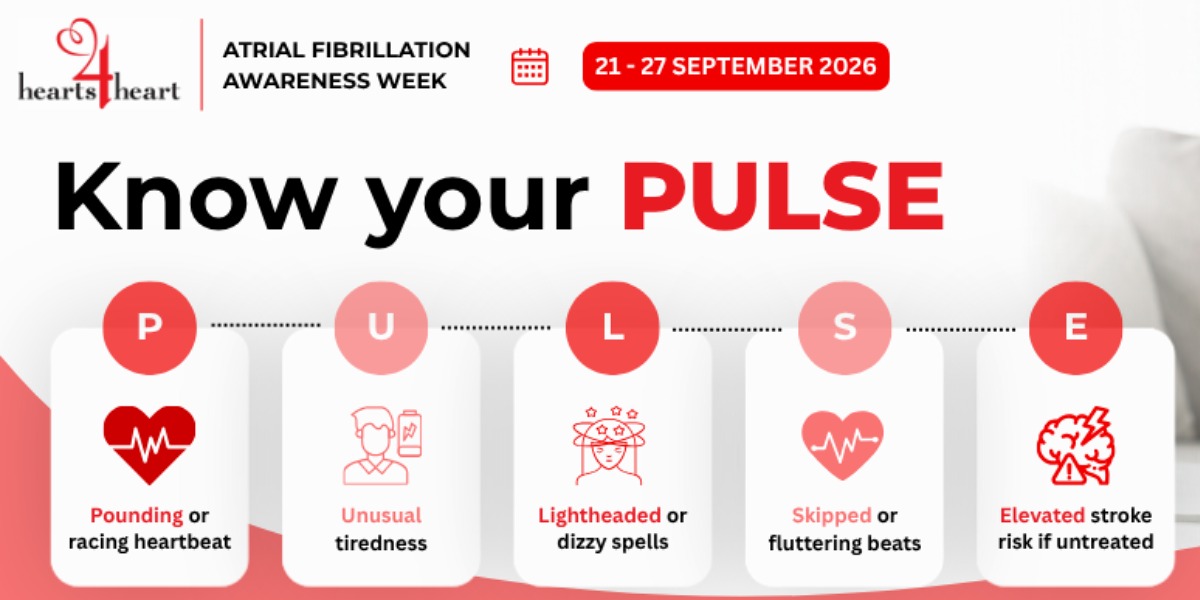
Just two per cent of Australians can correctly identify the key signs of atrial fibrillation, a heart rhythm condition linked to one in four strokes, prompting a new awareness campaign urging people to know the “PULSE” warning signs.
Atrial fibrillation is a heart rhythm condition in which the heart beats abnormally and does not pump blood as regularly or efficiently as it should. It is estimated to affect more than half a million Australians and can increase the risk of stroke.
The condition can cause blood to pool in the heart and form clots, which may travel to the brain and cause a stroke. One in four strokes are attributed to atrial fibrillation, and these are generally among the most debilitating cases. Awareness of that risk is also low, with less than half of Australians, 41 per cent, knowing an irregular heartbeat can increase their risk of stroke.
Hearts4heart has launched the PULSE acronym to help people remember the warning signs: Pounding or racing heartbeat, Unusual tiredness, Light-headed or dizzy spells, Skipped or fluttering beats, and Elevated stroke risk if untreated.
Recognising a symptom may not necessarily translate into action. While 65 per cent of Australians recognise a pounding or racing heartbeat as a possible sign of atrial fibrillation, only 21 per cent say they would see a GP or healthcare professional as soon as possible if their heart suddenly began racing or pounding for no obvious reason. More than one in three, 36 per cent, would instead wait to see whether the symptom recurred or resolved before seeking medical advice.
Tanya Hall, CEO and Founder of Hearts4heart, said the findings highlight an urgent need to make the signs of atrial fibrillation easier for Australians to recognise and remember.
“It’s incredibly concerning that only two per cent of Australians over the age of 18 can correctly identify the four key signs of atrial fibrillation,” said Ms Hall.
“People may recognise a racing heart as something to pay attention to, but AF can present in less obvious ways too. Symptoms such as unusual tiredness or feeling light-headed can be easy to dismiss as a busy lifestyle.”
“That’s why we’re launching PULSE with Atrial Fibrillation Awareness Week. It gives Australians a simple way to remember the signs, become more familiar with their own pulse and recognise when something may need further attention.”
Cardiologist and best-selling author Dr Warrick Bishop said improving awareness of atrial fibrillation symptoms and encouraging Australians to become more familiar with their pulse could help people recognise when something may require medical attention.
“Atrial fibrillation can affect people in different ways,” said Dr Bishop.
“Some may experience an obvious racing or pounding heartbeat, while others may notice more subtle symptoms such as tiredness, dizziness or fluttering beats. Some people may experience no symptoms at all.”
“Early detection is important because AF can increase the risk of serious complications, including stroke. Becoming familiar with your pulse and knowing the signs to look out for can help you recognise when something has changed and prompt a conversation with your healthcare professional.”
Atrial Fibrillation Awareness Week runs from 21 to 27 September. More information is available at www.hearts4heart.org.au.
Something going on in your part of the North Coast people should know about? Let us know by emailing newsdesk@nctimes.com.au