

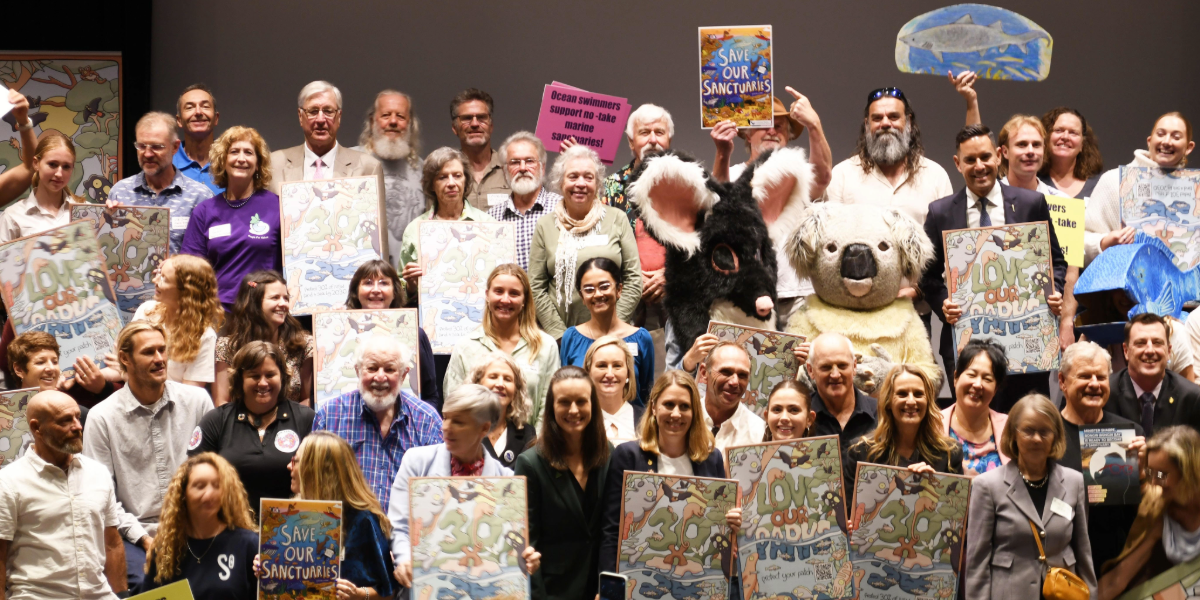
Farmers, fishers, surfers, and tourism operators have joined forces to press the NSW Government to protect and restore 30% of the state’s land and sea by 2030.
More than 200 organisations have joined the 30×30 NSW coalition. Its representatives and sporting names gathered at NSW Parliament on Tuesday, 17 November to present a joint letter calling on NSW to turn its commitment into action.
The 30×30 targets are part of the Kunming-Montreal Global Biodiversity Framework, a 2022 agreement to halt and reverse biodiversity loss by 2030. It is supported by 196 countries, including Australia, and endorsed by all state governments.
Among the speakers was Inverell cattle farmer Glenn Morris.
“Our water cycle is broken and so is our climate, but science shows we can fix it by increasing protection and restoration efforts,” Mr Morris said.
“Applying the 30% protection and restoration targets wouldn’t just be a win for wildlife, it is a vital lifeline for resource managers, from fishers to farmers.”
“The sheer diversity of organisations and people coming together from all walks of life shows how much support there is for a big and bold commitment by NSW.”
Other speakers included surfing pro Tom Carroll and former NSW environment ministers Matt Kean and Rob Stokes.
“Whether you surf, hike, fish or just love a walk on the beach, nature is part of who we are as Australians,” said surfer and filmmaker Torren Martyn.
“I’ve spent over three years of my life at sea, and I’ve seen both the ocean’s incredible power and how much it’s changing,” said world record-breaking solo sailor Lisa Blair.
The coalition wants a legislated NSW Nature Strategy that would:
- protect and restore at least 30% of every NSW land, marine, and freshwater bioregion by 2030
- embed First Nations leadership and cultural knowledge in land and sea management
- expand protected areas and marine sanctuaries, end native forest logging on public land, and prioritise under-protected ecosystems
- reduce land clearing, support private land conservation, and strengthen protection for rivers, wetlands, and catchments
- set measurable targets, dedicated funding, clear timelines, and public accountability.
“As a marine scientist and a recreational fisher, I see 30×30 as a simple mechanism to improve protections for our environment and to help marine life flourish for future generations,” said Alex Rigg of Fishers for Sanctuaries.
“The recent historic victory of the Great Koala National Park is a good start, but politicians can’t stop there,” said Richard Nicholls, retired owner of Manly Dive Centre, of the Dive Industry Association Australia.
“NSW hasn’t seen a new marine reserve created in two decades. This should be a priority to protect our precious environment.”
Tourism employs around 200,000 people in NSW, compared with about 60,000 in forestry and mining combined. NSW national parks attracted a record 65.5 million domestic visits in 2024-25.
“Our clients are adventurers, the holidaymakers that help our regional coastal economies to thrive,” said Rob Pallin, owner of outdoor store Paddy Pallin.
“The application of 30×30 on a state level is an insurance policy not just for a flourishing natural world, but for a flourishing economy.”
“30×30 is essential because healthy ecosystems are critical for mental and physical health,” said Dr Kim Loo of Doctors for the Environment Australia.
“We need the community to thrive, not just survive.”
Got something you want to say about this story? Have your say on our opinion and comment hub, North Coast Times Engage