

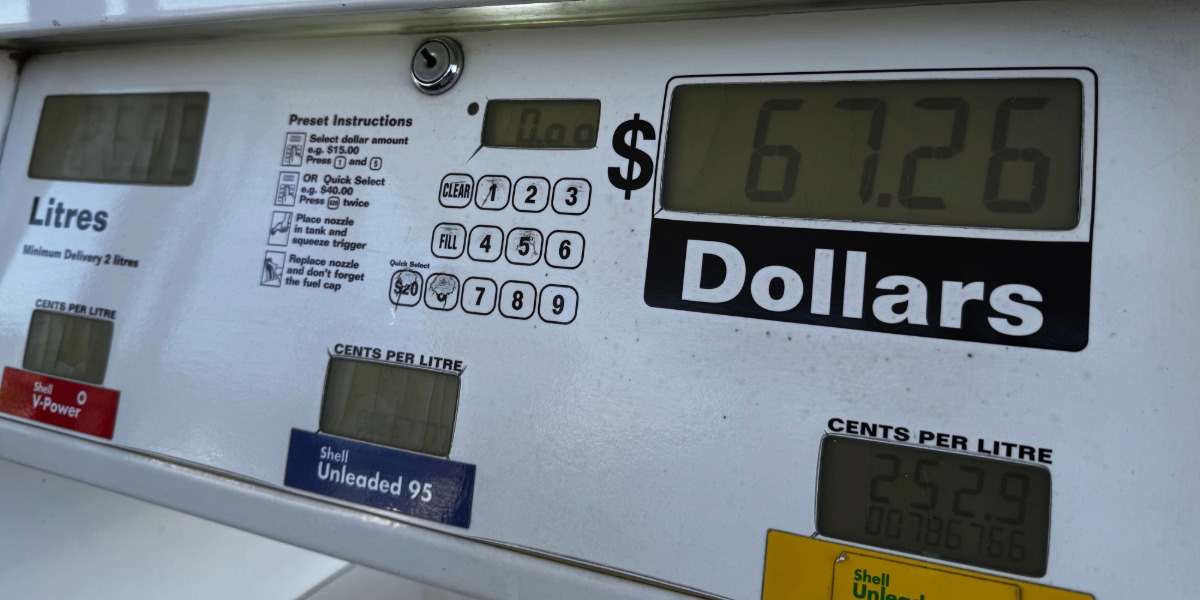
National Cabinet is meeting today as fuel shortages begin to ripple across multiple sectors of the economy, with growing pressure on governments to respond to impacts already being felt in agriculture, freight, charities and regional industries.
Leaders are expected to consider a mix of supply and demand measures, including a temporary cut to fuel excise, voluntary work from home arrangements and further steps to secure shipments as the Middle East conflict continues to disrupt global markets.
Treasurer Jim Chalmers said coordination would be key to avoiding more severe interventions.
“The best way to get through this is to get through it together, to work through these issues in a coordinated and ideally consistent way around the country,” he said.
While the federal government maintains fuel stocks remain at normal levels, the effects of rising prices, bulk buying and distribution constraints are increasingly visible on the ground.
Rationing already happening
The National Farmers’ Federation has warned that farmers are already rationing fuel and delaying critical work as uncertainty deepens.
“Farmers are making tough calls right now, including rationing fuel, delaying operations, and in some cases weighing up whether they can plant or harvest at all,” NFF president Hamish McIntyre said.
“Growers are deciding whether they can afford to buy fertiliser, fuel the tractor and sow a crop. Many will need to make that call before Anzac Day.”
The pressure is compounded by concerns about fertiliser supply, with both inputs tied to global markets disrupted by the conflict.
“Without certainty on fuel and fertiliser, some will scale back, and that has real consequences for food production and prices,” Mr McIntyre said.
The federation has urged National Cabinet to prioritise food production, calling for an agriculture-specific fuel plan, underwriting of fertiliser supply and targeted support for businesses across the supply chain.
“At the end of the day, if farmers can’t access fuel and fertiliser, they can’t produce food. It’s as simple as that.”
The consequences are also flowing through the freight sector, where rapidly escalating diesel prices are threatening the viability of transport operators that underpin supply chains across the country.
Trucking unable to absorb the costs
The Australian Trucking Association has backed federal moves to change the law to allow trucking businesses to recover fuel costs from customers, warning many operators cannot absorb the increases.
Chief executive Mathew Munro said the terminal gate price of diesel had surged from less than 166 cents per litre to more than 295 cents per litre following the outbreak of conflict involving Iran.
“Trucking businesses cannot absorb this increase, and most cannot pass it on. Without immediate action, the trucks will stop. And when the trucks stop, Australia stops,” he said.
“This is an emergency.”
Mr Munro said while changes to allow contractual chain orders would help, they would take time to flow through, leaving smaller operators exposed in the short term.
The association has called for immediate disaster recovery funding for small trucking businesses, a temporary removal of the 32.4 cents per litre road user charge, and regulatory flexibility to allow longer, more fuel-efficient trucks on more roads.
Local removalist business Allingham’s said its monthly fuel bill had almost doubled, but they were not increasing prices for their customers just yet.
“We normally do about $20,000 in fuel a month, we’re now looking about $35,000-$40,000,” Greg said.
“We’ve got a clause in the terms and conditions that if things get out of control we may put an excise on jobs that are already booked in. So far we haven’t.”
Charities hit from all sides
Higher freight costs are forecast to flow through the almost every sector of the economy, adding further pressure to food prices and the cost of essential goods. The impact is already being seen in the charity sector, where higher fuel costs and decreasing donations are reducing the amount of assistance organisations can deliver at the same time demand is rising.
Food rescue organisations including SecondBite, OzHarvest and Foodbank have warned they are facing a “double hit”.
SecondBite chief executive Daniel Moorfield said diesel costs for its fleet had risen by about 40 per cent, forcing difficult trade-offs.
“We could potentially supply 50,000 meals for that which we’re going to have to spend on fuel instead,” he said.
“It’s stressful now, but I’m thinking the next six months are going to be horrific.”
OzHarvest chief executive James Gorth said the impact was immediate and direct.
“Every extra dollar spent on fuel means less food getting to people who need it,” he said.
“It’s a real double hit — higher costs reduce how far we can go, while demand continues to grow.”
Foodbank has also warned it could lose volunteer transport support as partner organisations struggle to cover fuel costs.
The crisis is also threatening environmental and land management work that relies heavily on vehicles and machinery.
The Australian Land Conservation Alliance said fuel volatility was already affecting its members’ ability to operate in the field.
“From bushfire recovery and remediation activities, to restoring habitats and protecting threatened species, this work doesn’t happen from an office desk,” chief executive Jody Gunn said.
“It happens on the ground, often hundreds of kilometres from major centres. Without reliable fuel supply, essential environmental work simply can’t get done.”
North Coast Times is new! Connect with us by sending press releases to newsdesk@nctimes.com.au or enquire about advertising with us by emailing ads@nctimes.com.au.