

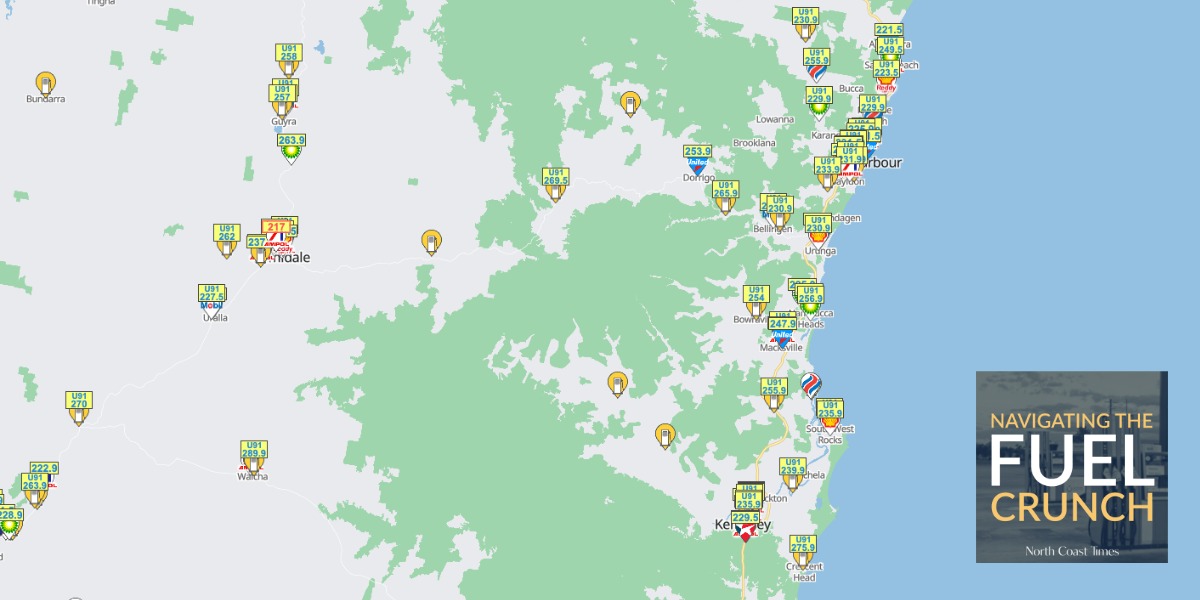
Want to avoid wasting fuel driving between empty servos? No problem, there is a growing number of apps designed to help motorists find both fuel availability and the best price.
Several apps and services now allow drivers to check fuel prices in real time, and in some cases, track availability and predict when prices are likely to rise or fall.
The most widely used is Petrol Spy, a free Australian-made app that aggregates government data and user reports to show current fuel prices at nearby stations. Its strength is simplicity: open the map, find the cheapest fuel nearby, and go. It draws directly on NSW Government data while also incorporating driver updates.
Another tool gaining traction during the current fuel disruption is PetrolPulse, which goes a step further. In addition to mapping prices, it attempts to answer a second question: should you fill up now or wait? It combines fuel price cycles with global oil indicators.
This story is prompted by a reader suggestion as part of our Fuel Crunch initiative.
“I believe there should be an app with lists of petrol stations stating what fuel they have, therefore if you drive to a station and they’re out of diesel you then have to look for another station, in the meantime you’re wasting fuel driving around.”
Make your own story suggestion at the end of the bottom of this page.
There are also more specialised tools. FuelRadar focuses on tracking fuel price cycles and publishing daily market updates, helping users anticipate when prices are likely to dip. MotorMouth offers similar functionality through a mobile app, though it is less visible outside its user base.
Another widely used option is the My NRMA app, which allows users to compare fuel prices across Australia and set alerts for price changes. Drivers can receive notifications when prices are about to rise or when it is a good time to fill up, or check a weekly fuel report within the app.
Most of these apps get their core information from government run systems, including FuelCheck in New South Wales. These platforms rely on legally mandated reporting from fuel retailers, meaning the data is considered highly accurate.
However, most of these tools historically focused on price rather than availability — the exact issue raised by the reader.
That is beginning to change.
One of the most significant developments is PetrolPulse’s new fuel outage tracker, which directly addresses the reader’s concern. The tracker provides a live, national map showing which service stations are out of specific fuel types, including diesel, premium fuels and unleaded. It is updated regularly using government fuel reporting data and can identify outages either through explicit “out of stock” signals or when a fuel type disappears from a station’s price feed.
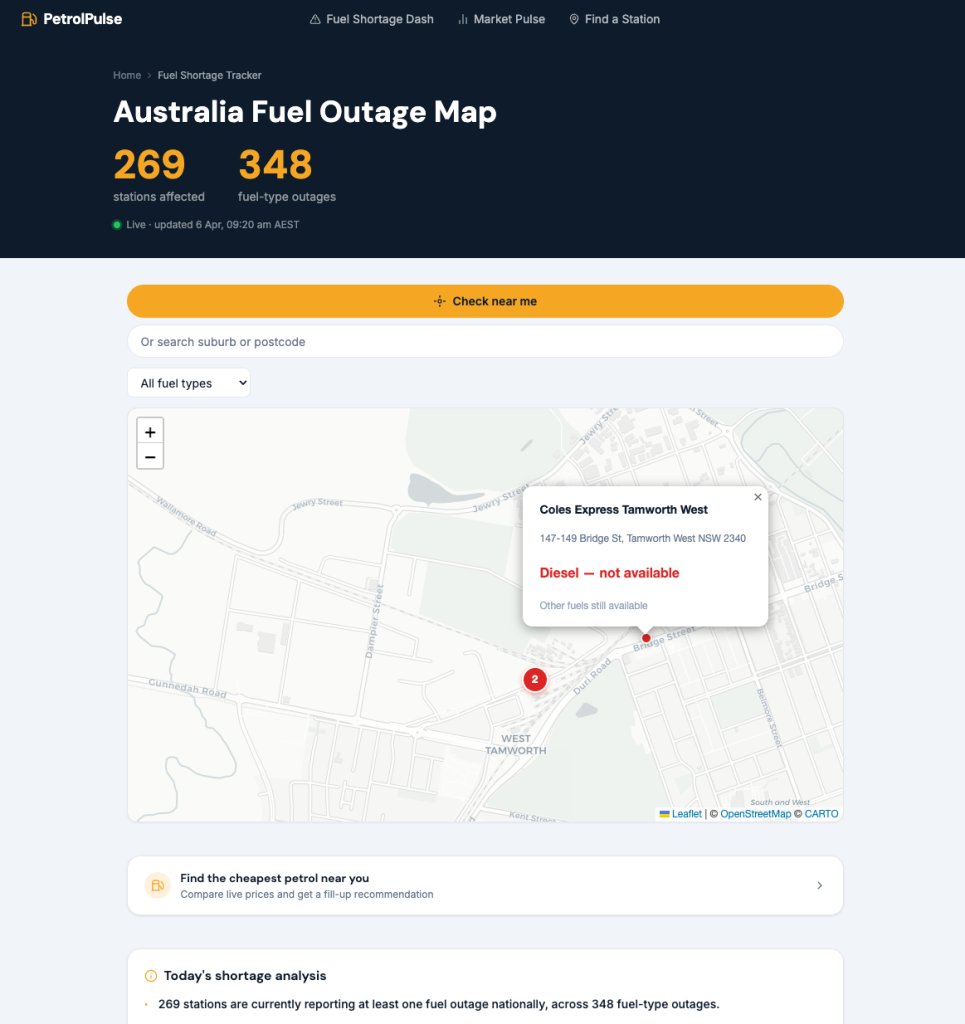
At any given time, the tracker can show hundreds of affected sites across the country, with breakdowns by state and fuel type. Recent data showed diesel shortages accounting for a significant share of outages, with New South Wales the most affected state.
Importantly, the tool refreshes frequently — in some cases every 30 minutes — giving motorists a near real-time view of where fuel is and isn’t available.
While it comes with the caveat that availability can change quickly, it is one of the first widely accessible tools to directly map outages, rather than leaving drivers to discover empty bowsers themselves.
The NSW Government is also moving in this direction, yesterday annoucning a $2.2 million upgrade to FuelCheck, aimed at improving both the quality of data and how it is presented to users. The service already provides real-time fuel price information from around 2,400 service stations across the state, but the new funding will expand its capabilities.
According to the government, upgrades will include improved data collection from retailers, making it easier for stations to provide details about fuel supply, as well as enhanced data analysis and a redesigned user experience.
The changes come as demand for the service surges. Daily usage of FuelCheck has jumped from between 8,000 and 10,000 visits in January to around 500,000 per day by the end of March, reflecting the growing pressure on motorists trying to navigate both high prices and patchy supply.
At the same time, NSW Fair Trading has ramped up enforcement, inspecting around 75 per cent of service stations across the state in recent weeks and issuing dozens of fines for breaches, including mismatches between advertised and actual prices.
Minister for Better Regulation and Fair Trading Anoulack Chanthivong said the upgrades were designed to give motorists greater confidence during a volatile period.
“Over the past two weeks, millions of NSW motorists have turned to FuelCheck to help find the best fuel price and navigate fuel supply gaps,” he said.
While no single app yet provides a perfect, real-time guarantee of fuel availability, the combination of government data, user reporting, and new outage tracking tools means the scenario described by the reader — driving from servo to servo hoping for diesel — is avoidable.

What do you need to know to get through the fuel crunch?
Tell us what information you need to make it through the fuel shortage crisis. Suggest a story!
Read other fuel crunch stories here.
Put your business in a story like this – find out more here.