

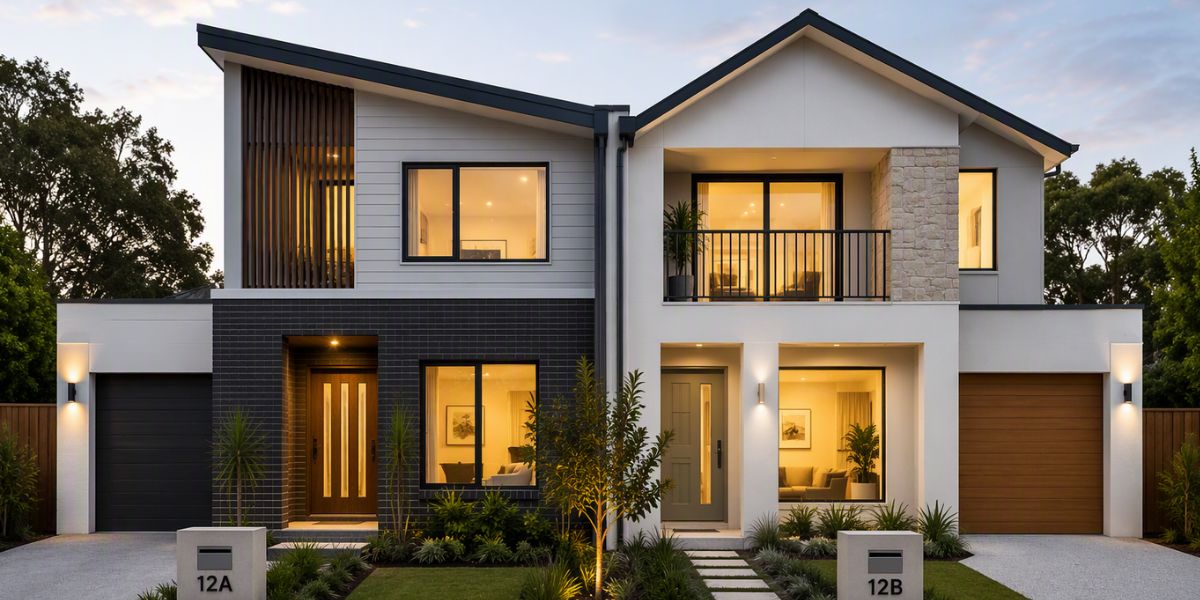
Around 5,000 additional properties could become eligible for dual occupancy development under a planning proposal from the City of Coffs Harbour.
The proposal would remove the minimum lot size requirement for dual occupancy developments on land zoned R2 Low Density Residential, with the aim of increasing housing supply.
The planning proposal is accompanied by amendments to the Coffs Harbour Development Control Plan (DCP), which are intended to maintain development quality through new design controls.
The proposal, endorsed by council at its 23 July meeting, will now be submitted to the NSW Department of Planning, Housing and Infrastructure for a gateway determination.
Dual occupancies are already a permissible land use in the R2 Low Density Residential zone but are currently limited to lots of at least 800 square metres. The City’s proposal would remove that minimum lot size requirement.
“We see this as an enabler for a greater variety and supply of affordable housing in existing neighbourhoods,” Mayor Nikki Williams said.
“In particular the change would promote infill development, supporting a compact urban form to help reduce urban sprawl. It’s about looking to encourage development in established urban areas already serviced by infrastructure, community facilities and public spaces.”
City Planning and Communities Director Ian Fitzgibbon said the proposed DCP amendments would help ensure high-quality urban design outcomes.
“We’re looking at design-based controls for dual occupancies within the zone R2 Low Density Residential, which would address matters such as built form, streetscape presentation, landscaping and residential amenity,” Fitzgibbon said.
“It’s an approach which would balance the need for greater housing diversity while staying in keeping with the prevailing character of a neighbourhood.”
Proposed DCP provisions include:
- ensuring development sites are wide enough to accommodate two dwellings, vehicle access and parking, boundary setbacks and landscaping
- ensuring development does not create unreasonable impacts on adjoining properties through vehicle access, manoeuvring or parking
- ensuring street-facing façades and front setback areas present a positive appearance and are not dominated by parking areas and driveways
- ensuring each dwelling in a dual occupancy is clearly identifiable as a separate dwelling.
“We’re striving to accommodate the needs of a growing and changing population by providing additional housing options for families, smaller households, older residents and key workers,” Fitzgibbon said.
If approved, the proposal could increase the number of R2 Low Density Residential lots eligible for dual occupancy development to about 11,000 across the Coffs Harbour local government area, up from about 6,000 currently.
Don’t miss any of the important stories from around the region. Subscribe to our email list.