

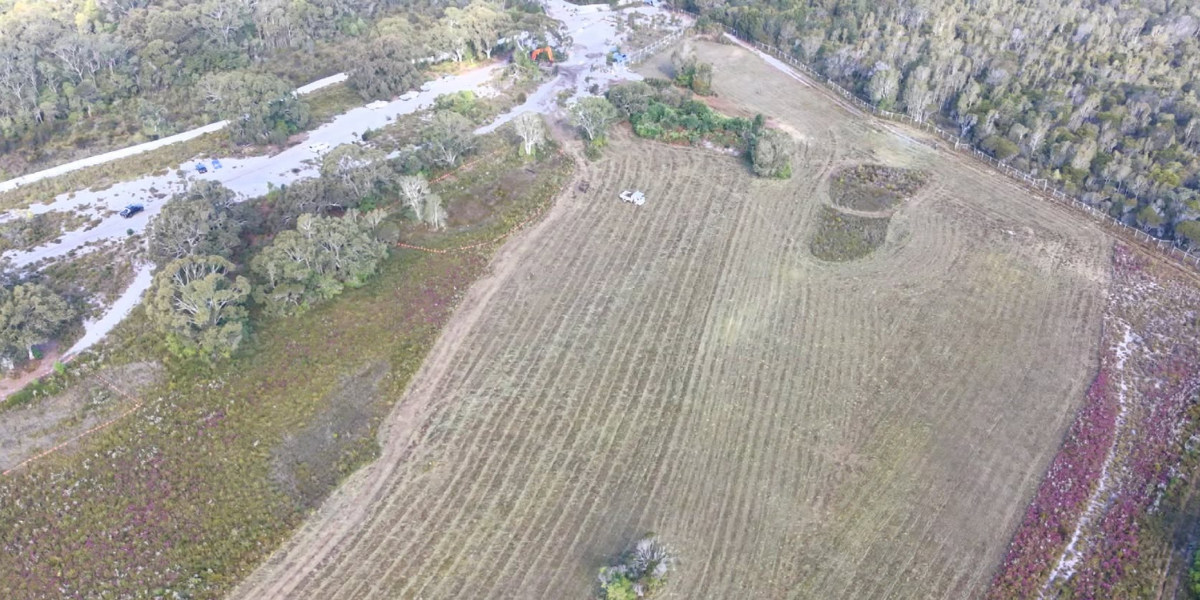
Save Wallum Inc has lost a second bid to protect the Wallum site at Brunswick Heads from clearing, after the NSW Land and Environment Court dismissed an application for an interim injunction on Tuesday. The loss adds to a Federal Court defeat on 16 September and hardening the odds against the campaign as its 5 October appeal deadline approaches.
Clarence Property markets the project as Bayside Brunswick Heads, describing it as the final stage of an existing residential community. The developer’s own promotional material says development approval covers 123 residential lots and three medium density sites, with lots ranging from 450 to 965 square metres. It states that more than 60 per cent of the 30 hectare site, around 18 hectares, will be set aside as a conservation zone for the rehabilitation of Wallum habitat. Construction was originally targeted to begin in 2025, subject to further approvals.
Save Wallum Inc President Luciana Bowen, who sits on the group’s legal team, said the back-to-back losses were hard to accept.
“We’ve had a lot of court cases recently in the last week for the Save Wallum campaign in two separate court cases recently that were sadly dismissed,” she told Bay FM’s Eco Futures program.
“Incredibly disappointed.”
Ms Bowen said both courts found the group had not established a balance of convenience in favour of keeping protections in place while an appeal is prepared.
“It just, from a layman’s perspective, incredibly defies logic, incredibly disturbing that the legal system can say it’s okay to slash what’s recognised as threatened habitat,” she said.
The setbacks follow Justice Melissa Perry’s ruling on Monday, 7 September. More than 100 people gathered at Bayside Park in Brunswick Heads to watch a live stream of the Federal Court dismissing Save Wallum’s bid for a permanent injunction against the 124-lot Clarence Property development.
Ms Bowen addressed the crowd immediately after that decision. “We lost the final judgment. Our application for permanent protection of the land has been dismissed. We don’t know why yet,” she said.
“It is an incredibly disappointing outcome considering what is at stake.”
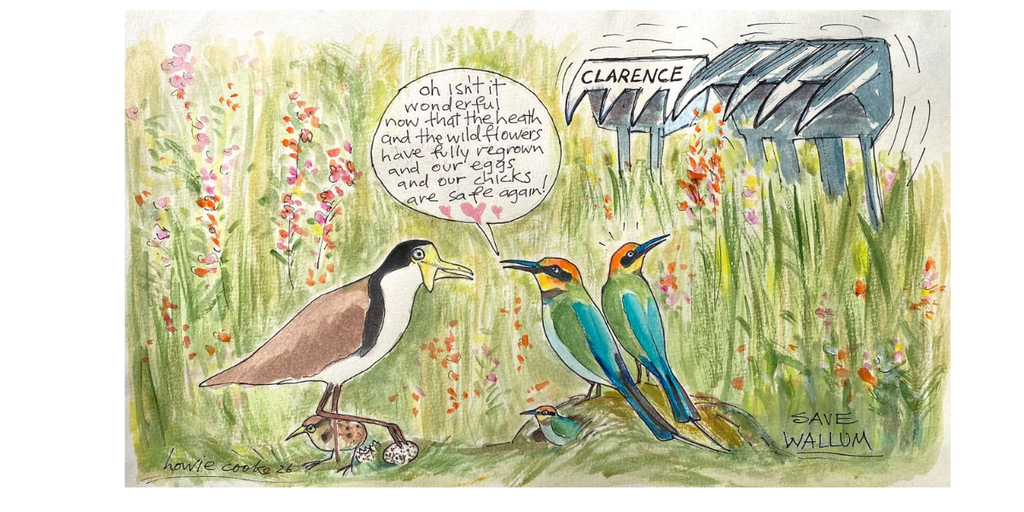
“Rainbow honey eaters are currently nesting on site, which they do in the sand, in ground hollows, right where they want to take the slasher next week.”
Prominent environmentalist and former Greens leader Bob Brown also spoke at the gathering.
“Wallum’s unique natural ecosystem has been betrayed by the system, big business, state and federal governments, bureaucrats and now a dismissive court which has dismissed the laws of nature,” he said.
Local Bayside resident Lisa Sandstrom thanked the crowd. “Whatever happens with Wallum, this campaign has ignited the most incredible community of people who will genuinely be there for each other,” she said.
Of the 30 hectares in dispute, Ms Bowen said around a third sits within an existing coastal marine park zone next to Simpsons Creek and cannot be developed under any circumstances. The remaining land, close to 20 hectares, is Wallum heathland, of which less than one per cent remains in Byron Shire.
A “zombie DA”
Campaigners describe the underlying approval as a “zombie development application,”. This is a term used for planning consents granted decades ago that developers later revive without having to clear the environmental standards in place today. The Wallum approval traces back to a 1988 rezoning and a 2013 concept plan.
New South Wales has been singled out as the only state allowing historic consents of this kind to proceed without a contemporary impact review, prompting a NSW Parliamentary Inquiry into Historical Development Consents, which delivered its report on 30 July.
Separately, Save Wallum spent months last year pressing Byron Shire Council for evidence that its own buffer zone conditions on the site had been properly applied. It was argued the protections had been reduced over successive iterations of the approval. Council staff at the time declined to answer detailed questions on the matter.
Bulldozers reach the site
The interim injunction that had protected the site since July 2024 fell away on Wednesday, 16 September, when Federal Court Justice Angus Kennett refused to extend it while Save Wallum prepares its appeal.
Trucks carrying bulldozers reached the site that day, with two residents locking themselves onto vehicles blocking Omega Circuit in an attempt to stop them. Both were arrested.
A First Nations woman was also arrested at the site and later released without charge.
A Save Wallum spokesperson said the ruling meant Clarence Property could undertake limited works within the development footprint. This was subject to undertakings given to the court, including confining slashing to a designated area and monitoring the artificial frog ponds under a qualified ecologist.
Ms Bowen said the works could only proceed to a limited point regardless.
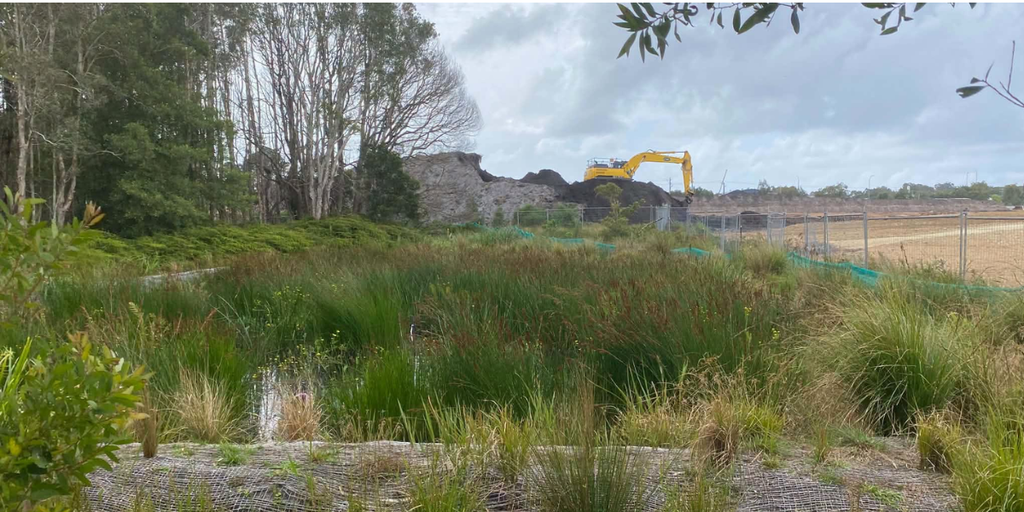
“They can only go ahead with stage one and slashing at this stage,” she said, referring to the construction of 36 artificial ponds for the Wallum froglet.
Those ponds must be monitored before any further stage can proceed through its own approval process.
A second defeat
This week’s NSW Land and Environment Court decision concerned a separate application to stop slashing under the state’s Biodiversity Conservation Act. This lists the Wallum froglet and the Wallum sedge frog as threatened species present within the development footprint.
Ms Bowen said the presiding judge had relied on the developer’s planning consultant, who argued the frogs only occasionally occupy the site rather than living there permanently.
“Where else do they live if they don’t live in their habitat? It just defies logic,” she said.
Ms Bowen said the same consultant had argued a suburban front lawn would suffice as habitat for the species, an assessment she said the court accepted.
Ms Bowen also raised concerns about how expert evidence was weighed during the underlying Federal Court trial.
She said scientists engaged by the community had their evidence limited because they had previously spoken publicly about the development’s likely impact, a restriction she said was not applied to the developer’s paid planning consultants.
“There is one standard for a developer, and another standard for the community.”
She said the community had itself identified two threatened species on site, the Mitchell’s rainforest snail and the Wallum sedge frog, that the developer’s own consultants had failed to detect over three decades of surveys.
Native title and cultural heritage
The dispute also sits inside a wider question of First Nations rights over the land. The Byron Bay and Brunswick Heads region was recognised in 2019 as non-exclusive Native Title land belonging to the Bundjalung of Byron Bay, the Arakwal Bumberlin people. However, because the Wallum site is privately owned freehold land, Native Title does not override the developer’s ownership.
In mid-2024, lawyers acting for representatives of seven Bundjalung clans applied under Section 10 of the Commonwealth Aboriginal and Torres Strait Islander Heritage Protection Act for long-term protection of the site. They cited Aboriginal pathways and culturally significant pre-colonial trees.
That application sits with the federal Environment Minister and contrasts with a 2009 cultural heritage report commissioned by Clarence Property. This report found no areas of particular cultural significance on site, a finding the Tweed Byron Aboriginal Land Council has stood by.
What happens next
Save Wallum Inc has four grounds on which it intends to appeal Justice Perry’s 7 September judgment. The case is due to be lodged by 5 October and heard by the Full Court of the Federal Court rather than the original judge.
Beyond that, the only further avenue is the High Court.
Ms Bowen said the group was also pursuing philanthropic support to buy the land outright from Clarence Property and place it in permanent conservation.
“We really believe in the value of nature and the value of biodiversity and preserving it, particularly when there are threatened species, and when their homes are at jeopardy of being totally annihilated,” she said.
“Our environmental laws aren’t worth the paper they’re written on,” Ms Bowen said. “They have no substance, no backbone.”
Got something you want to say about this story? Have your say on our opinion and comment hub, North Coast Times Engage