

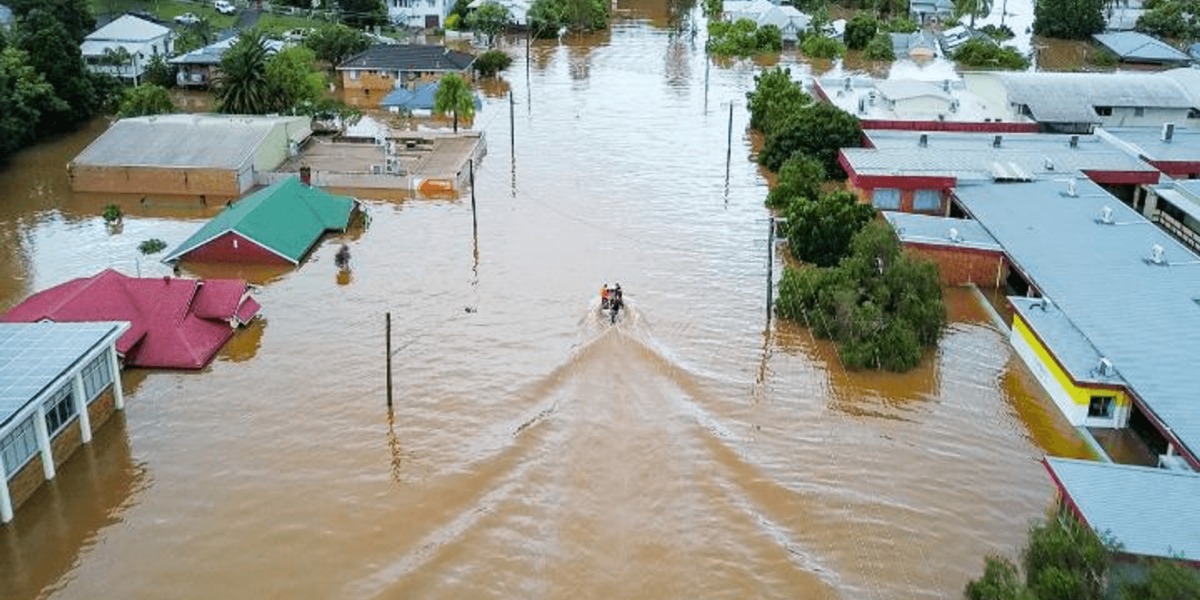
Flood-hit North Coast councils say a proposed NSW funding change could cost them $18.9 million a year, just as Canberra confirmed its disaster recovery deal with NSW will stay substantially unchanged.
On Friday, 9 October, the Commonwealth Government announced that Disaster Recovery Funding Arrangements between the Commonwealth and NSW will remain substantially unchanged. Under the arrangements, the Commonwealth can fund up to 75 per cent of core disaster recovery measures.
“Today’s announcement helps give NSW communities certainty around future disaster funding,” stated Minister for Recovery and Minister for the North Coast Janelle Saffin.
“As NSW Minister for Recovery, I welcome the retention of the core aspects of the existing disaster funding arrangements and look forward to continuing engagement with the Commonwealth to reduce the impact of disasters in our communities.”
Ms Saffin also thanked Minister for Emergency Management Kristy McBain for her engagement on the reforms.
But a separate fight is brewing closer to home. Tweed Shire, Lismore City, Byron Shire, Kyogle, and MidCoast councils have united to call on the NSW Government to pause proposed changes to the 2027/2028 Financial Assistance Grants methodology.
Across the five council areas, the new methodology would cut about $18.9 million a year. That is an estimated $222 million over 10 years once indexation is counted, and an average reduction of around 32 per cent.
Based on the councils’ modelling, using letters of advice from the NSW Local Government Grants Commission, Tweed Shire Council would lose $6.53 million a year (47.16 per cent) and Lismore City Council $4.25 million (49.54 per cent). Byron Shire Council would lose $2.40 million (51.48 per cent), MidCoast Council $4.96 million (20.71 per cent), and Kyogle Council $771,000 (10.21 per cent).
“The proposed methodology would see a $4.25 million hit to our budget a large portion of which includes contributions for local roads,” said Lismore City Mayor Steve Krieg.
The councils say the proposed model includes disaster recovery funding.
“The new model adds in all operating grants including disaster recovery funding which should be excluded,” Mr Krieg said.
“Disaster Recovery Funding Arrangements are specifically tied to repairing and restoring assets damaged by disasters.”
“They are not unrestricted revenue available to fund ordinary council operations and should not be treated as evidence that a council has greater capacity to fund its ongoing services.”
Tourism is another sore point.
“Tourism is a major economic driver across the region, with visitor numbers placing significant additional load on local roads, public spaces, waste services and community facilities, often well beyond what our ratepaying community contributes to,” said Byron Shire Mayor Sarah Ndiaye.
The councils say they have been denied access to the detailed calculations behind the proposal. They support a fair distribution of funding across NSW, but say moving money between councils cannot be the only answer when local government as a whole is underfunded.
“We are calling on the Government to be transparent with councils about how these calculations are being made,” Mr Krieg said.
Tweed Shire Mayor Reece Byrnes said including Disaster Recovery Funding Arrangements operating grants would create large year-to-year swings for councils.
“For the Tweed this is a loss of $6.5 million a year, close to half our grant,” Mr Byrnes said.
“That is money that goes into roads, parks and the everyday services people rely on, and it cannot simply be absorbed.”
“We are still rebuilding from the 2022 floods and Cyclone Alfred.”
“Taking that much out of our budget while that work is underway makes no sense for a community that has already been through so much.”
Like what you’re reading? Support North Coast Times by making a small contribution today and help us keep delivering local news paywall-free. Donate now