

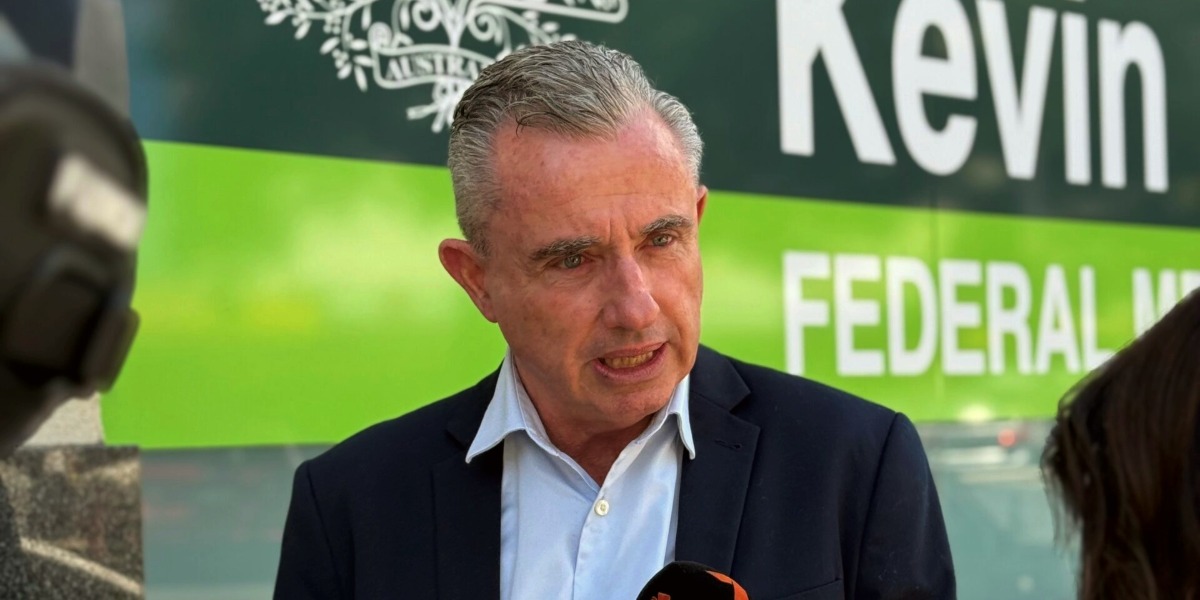
Families are paying more on the mortgage, at the supermarket, and on power, says Federal Member for Page Kevin Hogan, after the Reserve Bank hiked interest rates for the fifth time this year.
In a split 6-3 decision on Tuesday, 3 November, the Reserve Bank of Australia (RBA) board lifted the cash rate by 25 basis points to 4.85 per cent, the highest level since 2008.
“Families are cutting back everywhere they can,” said Federal Member for Page Kevin Hogan.
“They’re spending more on the mortgage, more at the supermarket, more on power and more just to get through the week.”
Mr Hogan, the Shadow Assistant Treasurer, said Australians were paying the price for Labor’s failure to get the economy under control.
He said repayments on the average mortgage were now $30,000 a year higher than when Labor came to power, with housing costs up 25 per cent, electricity up 36 per cent, food up 19 per cent, and insurance up 44 per cent.
Across all five rate rises this year, more than $450 has been added to monthly repayments for the average mortgage holder with a $600,000 loan, according to comparison site Canstar.
Property prices have already fallen by 6.7 per cent nationwide since the first hike in February, according to data provider Cotality.
Mr Hogan said higher rates were also hurting small businesses already dealing with rising power bills, insurance, and everyday operating costs.
RBA governor Michele Bullock said overseas factors were driving up inflation, but domestic capacity pressures were also higher than previously thought.
She would not rule out further hikes if inflation stayed too high.
“It is critical that we stop expectations for high inflation from becoming embedded in price-setting decisions across the economy, or the problem will only get worse,” Ms Bullock said.
“Some pain now will prevent even worse pain down the track.”
The RBA now expects unemployment to rise to five per cent by 2028 and real wages to go backwards by one per cent in 2026.
The pressure is now on Treasurer Jim Chalmers to find savings in December’s mid-year budget update.
Dr Chalmers said budgets were not the primary driver of prices, but the government took responsibility for its part in fighting inflation.
“We’ve found almost $180 billion in savings since coming to government,” Dr Chalmers said.
“There have been savings in all eight of our budget updates so far, and there will be more savings in the mid-year budget update in December.”
Business groups want deeper cuts.
“It’s hard to ask Australians to tighten their belts when the federal government isn’t tightening its own,” said Business Council of Australia chief executive Bran Black.
HSBC Australia chief economist Paul Bloxham put the risk of a recession at one in two.
“If growth does not weaken as fast as we expect, there remains a risk the RBA may have to hike further yet,” Mr Bloxham said.
Don’t miss any of the important stories from around the region. Subscribe to our email list.