

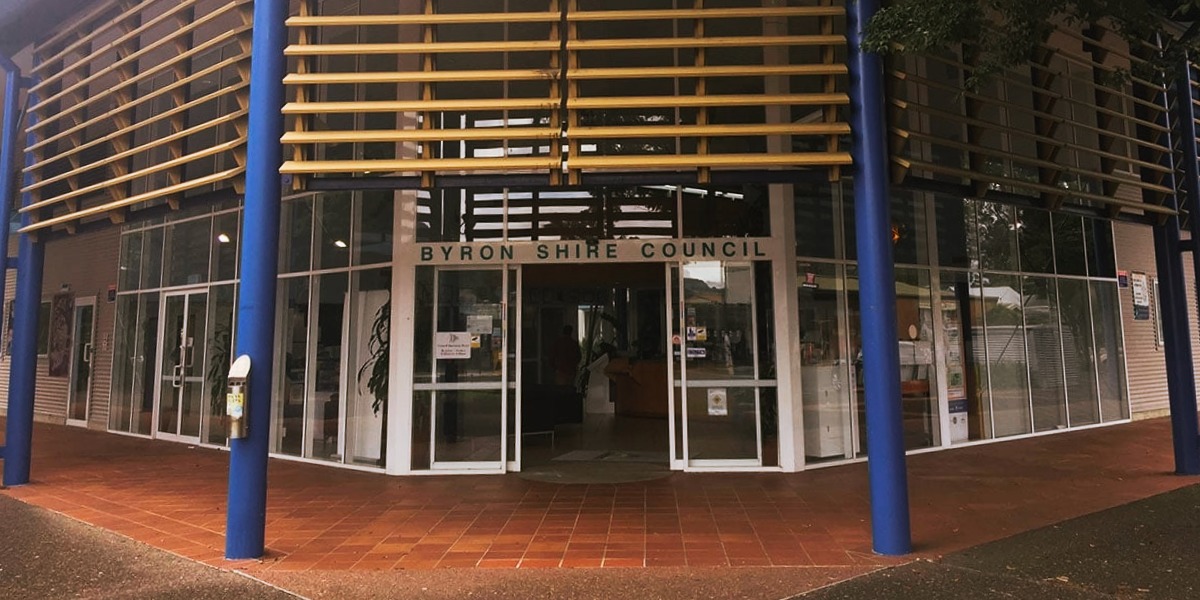
Byron Shire Council has joined a push for a national “polluter pays” approach to climate disaster recovery, calling on the Federal Government to establish a Climate Compensation Fund financed by levies on major coal, oil and gas companies.
The motion, passed at last week’s Byron Shire Council meeting, comes as the region continues to recover from a string of major natural disasters, including the 2019-20 Black Summer bushfires, the devastating 2022 floods and Cyclone Alfred.
Councillor Elia Hauge, who introduced the motion, said local communities were carrying an increasing financial burden from climate-related disasters while fossil fuel companies continued to generate substantial profits.
“Byron Shire has lived through the 2019-20 bushfires, the catastrophic 2022 floods, Cyclone Alfred and ongoing coastal erosion at Belongil and New Brighton,” Cr Hauge said.
“That is not a run of bad luck. That is a pattern.
“The climate crisis means more frequent and more intense extreme events. The funding systems we have are not built for the worsening climate impacts we are experiencing.”
The motion calls on the Federal Government to establish a Parliamentary Inquiry into the adequacy of the National Adaptation Plan, create a dedicated funding stream for local governments facing climate-related risks, and introduce a Climate Pollution Levy on coal, oil and gas export corporations.
Mayor Sarah Ndiaye said the community was still dealing with the consequences of the 2022 floods more than four years later.
“Four years on from the 2022 floods, people in this community are still in temporary accommodation,” Mayor Ndiaye said.
“We never recovered the housing stock we lost, let alone built more.
“Every time a disaster hits, we are starting from behind. Recovery funding designed for once-in-a-generation events does not work when the events stop being once-a-generation.”
Mayor Ndiaye said councils were increasingly being forced to absorb disaster recovery costs through rates and grant applications.
“Every time, it is taxpayers and council budgets absorbing costs that the corporations responsible for driving these disasters are not contributing to,” she said.
“That has to change.”
According to council figures, Byron Shire has recorded more than $198 million in road repair and reconstruction costs from the 2022 flood event and Cyclone Alfred, covering road infrastructure alone.
The council said the 2022 floods resulted in 41 Essential Public Asset Restoration applications and a $52.5 million disaster recovery package, with works expected to continue until at least 2027. Following Cyclone Alfred, the council has lodged a further $40 million in recovery funding applications.
The motion also backs a proposal due to be considered at the Australian Local Government Association’s National General Assembly in June, seeking greater federal support for climate adaptation and resilience measures.
The move makes Byron Shire one of a growing number of councils across Australia advocating for a national compensation model that would require major fossil fuel producers to contribute towards disaster recovery, infrastructure repair and community resilience projects.
Got something you want to say about this story? Have your say on our opinion and comment hub, North Coast Times Engage