

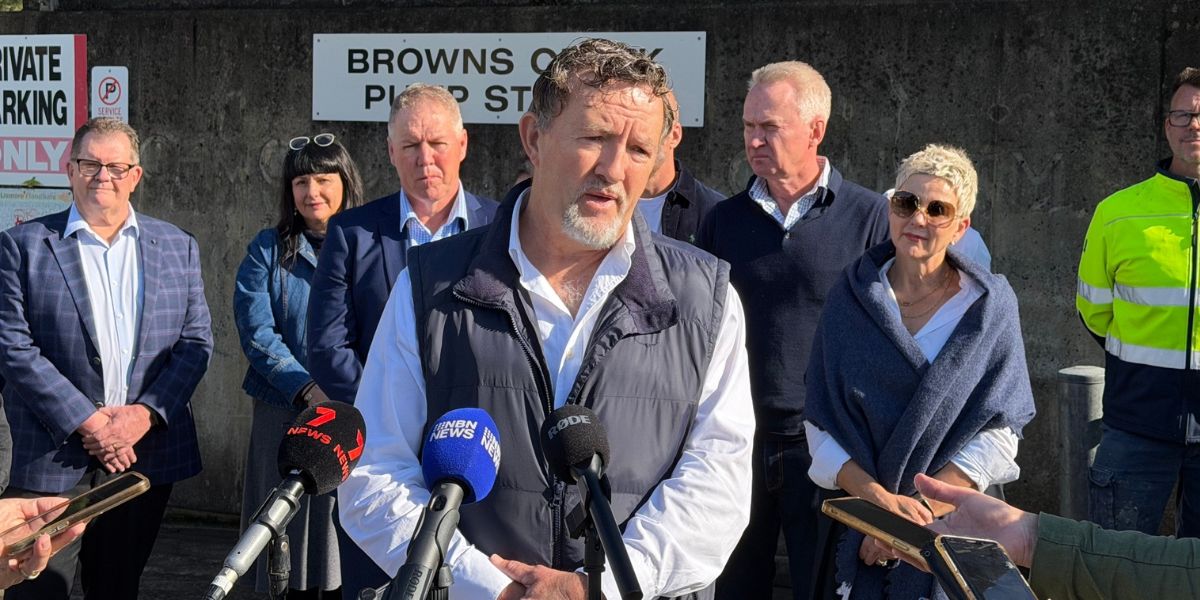
The Lismore Alliance has welcomed the release of the CSIRO Northern Rivers Resilience Initiative final report, saying it provides the strongest scientific foundation yet for addressing flood risk across the Northern Rivers.
The report finds that flood mitigation measures could significantly reduce flood heights throughout the region. The Alliance says the findings are critical to securing the long-term economic future of the Northern Rivers.
“The Lismore Alliance stands completely behind this science,” said Simon Stahl, Chair of the Lismore Alliance.
“Four years of rigorous, independent, government-funded research has given this region what it has never had before – credible proof that flood mitigation works here.”
The Northern Rivers contributes $44.4 billion to the economy each year and supports more than 123,000 jobs. The Alliance says every major flood threatens businesses, employment and future investment across the region.
Beyond the immediate impact of natural disasters, the Alliance says ongoing flood risk continues to undermine business confidence, limit investment, make it harder to attract and retain workers, and push insurance costs beyond the reach of many businesses.
“Flood risk is not just a community safety issue – it is the single biggest constraint on the economic future of this region,” said Stahl.
“When businesses cannot get affordable insurance, when investors look elsewhere, when workers choose not to move here because of flood risk – the entire regional economy suffers.”
The Alliance welcomed the joint $3 million commitment from the Australian and New South Wales governments to begin feasibility work arising from the CSIRO report and urged both governments to move quickly.
It said every month of delay leaves communities and businesses exposed to the risk of another major flood.
“Three million dollars for a feasibility study is a start and we welcome it,” said Stahl.
“But we want to be clear that the business community will be watching how quickly this moves and what comes out of it. We cannot afford for this to become another process that takes years and produces another document. The science is done. The clock is ticking. We need to see this move at pace.”
The Alliance also noted that landholder compensation was raised during recent CSIRO community briefings and said fair compensation should be built into the feasibility process from the outset.
“We hear the concerns of landholders in the upper catchment and we take them seriously,” said Stahl.
“Fair compensation for any land use impacts must be part of this process. These communities are being asked to be part of a solution that protects everyone downstream. That deserves proper recognition and proper recompense.”
The Alliance said it strongly supports nature-based restoration across the Northern Rivers but believes those measures should complement, rather than replace, engineering solutions designed to reduce flood heights during major flood events. It said the CSIRO report makes that distinction clear.
“We are strong supporters of nature-based solutions and we always have been,” said Stahl.
“They genuinely matter for the health of our rivers and our landscape. But we have to be honest with our community. Nature-based solutions do not lower flood heights in a major event. The CSIRO says so. And after a $16 billion flood, our community deserves engineering solutions that actually keep the water down.”
The Alliance called on the Australian and New South Wales governments to commence the feasibility study immediately, ensure it is adequately resourced, retain CSIRO’s technical expertise throughout the process, and deliver funded infrastructure outcomes rather than further delays.
“The science has spoken,” said Stahl. “Our businesses, our workers and our community are counting on governments to listen.”
Something going on in your part of the North Coast people should know about? Let us know by emailing newsdesk@nctimes.com.au