

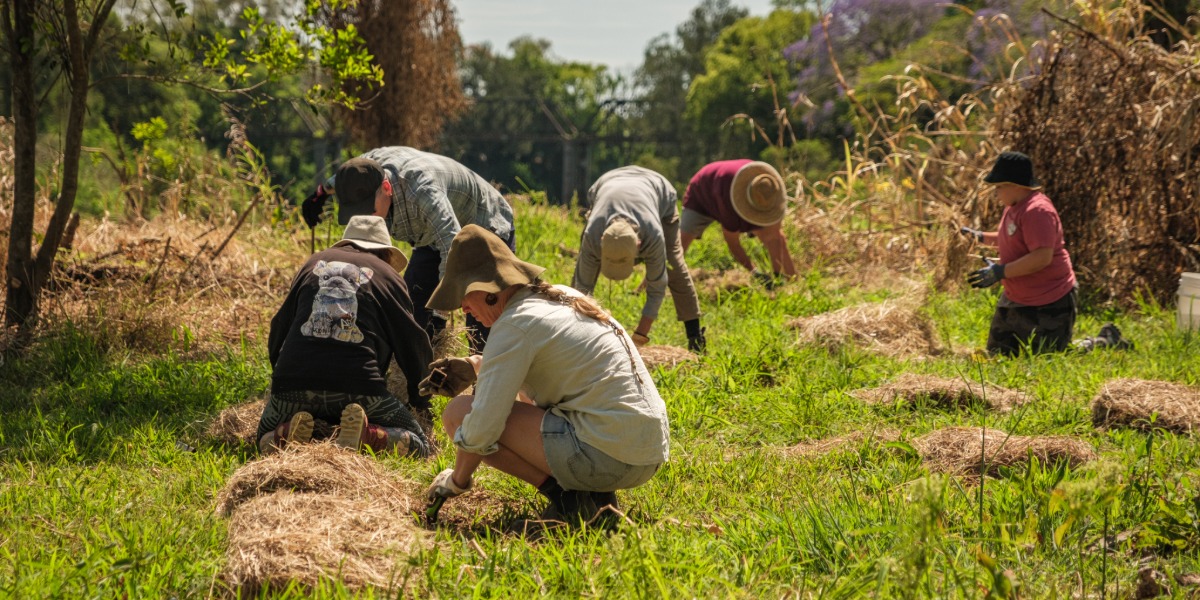
Landcare volunteers have racked up an extraordinary win for Lismore’s rivers and rainforests, with more than 17,000 native plants now in the ground across the city under the Rainforest to River project.
The project is restoring critically endangered lowland subtropical rainforest, wetland and riverbank habitat across 16 sites covering 42 hectares throughout Lismore, with more than 500 Landcare and community volunteers rolling up their sleeves to help.
At the South Lismore Duck Pond, some of the native trees planted by volunteers have already grown to more than two metres tall in less than a year, giving an early glimpse of how the sites will transform as the project matures.
Lismore City Council Environmental Strategies Officer Hannah Rice-Hayes said the growth showed what sustained restoration and strong community involvement could achieve.
“To see some of the trees at the South Lismore Duck Pond already reaching more than two metres in around 10 months is incredible,” Ms Rice-Hayes said.
“It’s fantastic to see the difference being made by our Landcare groups, project partners and volunteers, and to watch these sites begin to change so quickly.”
The project is reconnecting fragmented vegetation into stronger habitat corridors for native wildlife, while improving biodiversity and the health of Lismore’s waterways. Restoration work includes planting native species, controlling weeds and supporting natural regeneration, building ecosystems more resilient to flooding, weeds and pollution.
It is funded by the Australian Government’s Natural Heritage Trust under the Urban Rivers and Catchments Program, with support from Lismore City Council, Rous County Council, Wilsons River Landcare Group, Richmond Landcare, Widjabul Wia-bal Gurrumbil Aboriginal Corporation, Ngulingah Local Aboriginal Land Council, South Lismore Duckpond Landcare, Lismore Lake Landcare, Far North Coast Canoe Club, Richmond Riverkeeper, Big Scrub Rainforest Conservancy, OzFish Unlimited, Revive Northern Rivers, North Coast Local Land Services, and Birdlife Australia’s Northern NSW Chapter.
Federal Minister for the Environment and Water Murray Watt said it was great to see Landcare groups and the local community collaborating on habitat restoration.
“Restoring riparian habitat is one of the best ways we can support healthy rivers and the native animals and plants that depend on them,” Minister Watt said.
“The Albanese Government is proud to fund initiatives like this across the country, helping to leave nature better than we found it.”
With spring approaching, residents will get another chance to get hands-on, with community planting days planned for North Lismore Wetlands on Saturday, 26 September, South Lismore Duck Pond on Saturday, 3 October, and Simes Bridge in North Lismore on Sunday, 11 October. No previous planting experience is required.
Ms Rice-Hayes said the project’s diversity was one of its biggest drawcards for volunteers.
“One of the great things about this project is just how different each location is,” Ms Rice-Hayes said.
“You can be beside the river, surrounded by wetlands or standing beneath the canopy of regenerating rainforest. These are beautiful parts of Lismore and there is a real sense of serenity at many of the sites.”
Council is urging residents to get involved before the seedlings mature into the rainforest canopy of the future.
“Every planting day adds another piece to the bigger picture. The trees people plant today will continue growing and providing habitat for decades to come,” she said.
“If you enjoy being outdoors, come along to one of our spring planting days and lend a hand. You’ll be helping restore our natural environment and you might just discover a little piece of paradise in Lismore that you never knew existed.”
Got something you want to say about this story? Have your say on our opinion and comment hub, North Coast Times Engage