

Regional communities are facing more pain and few answers as governments continue to insist fuel supply remains secure, despite clear evidence of shortages, rising prices and growing pressure on households, businesses, and farmers.
An emergency meeting convened by the Australian Competition and Consumer Commission in Sydney and Melbourne today laid bare the scale of the problem, with motoring groups warning of the real-world impact of rapid price spikes and supply disruptions.
The meeting, attended by major fuel companies, wholesalers, retailers and motoring organisations, focused heavily on explaining recent price hikes and volatility in global markets. But for many regional operators, the discussion again stopped short of delivering immediate solutions.
ACCC Chair Gina Cass-Gottlieb said regulators were now closely monitoring behaviour in the fuel market during the ongoing Middle East conflict.
“We understand the concerns of farmers, businesses and consumers about petrol and diesel supplies in regional locations,” she said.
She also warned fuel companies against collusive or misleading conduct, saying the ACCC would take action if necessary. The ACCC said it would continue to monitor fuel prices and supply issues, including expanding its reporting to include more than 190 regional locations.
Despite that scrutiny, the core issue for our region remains unchanged: fuel may be arriving into the country, but getting it to country areas is another matter.
NSW Roundtable offers no help, only “information sharing”
That was acknowledged at a separate NSW Government fuel security roundtable held yesterday, where officials maintained that overall supply remains stable, while admitting distribution issues are emerging in regional areas.
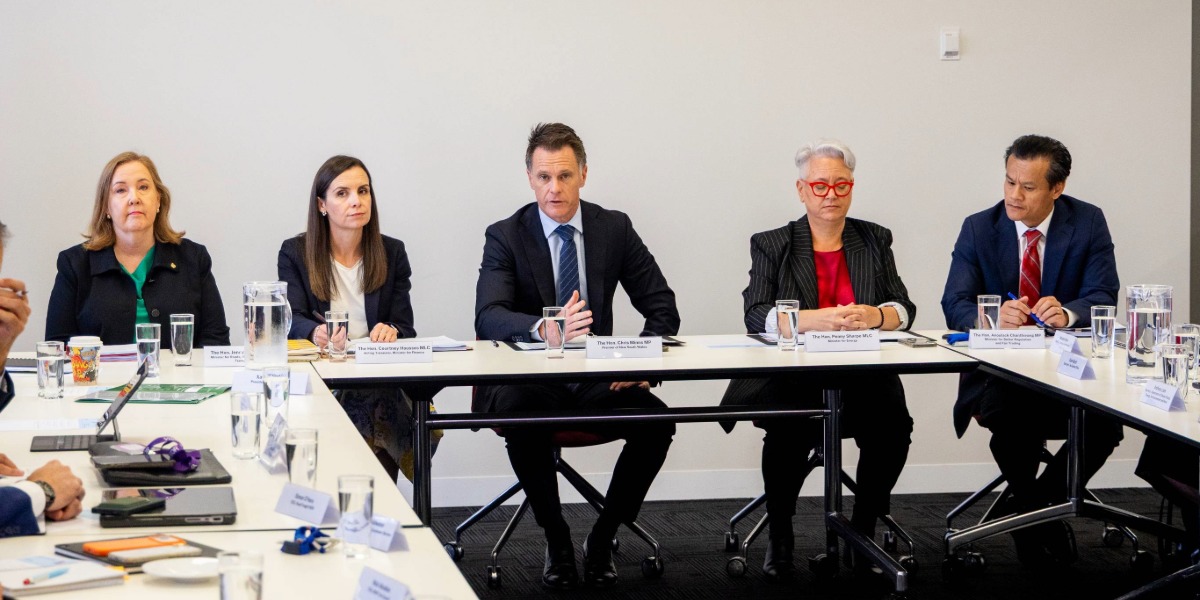
More than 50 representatives from fuel companies, agriculture, transport, local government and consumer groups attended the meeting, which was chaired by Energy Minister Penny Sharpe.
Premier Chris Minns said the focus was on coordination rather than immediate intervention.
“While global fuel supply challenges are beyond our control, there are practical things we can do here in New South Wales to ensure fuel is being distributed where it’s needed most, particularly in regional communities,” he said.
The roundtable stopped short of announcing major new measures, instead agreeing to improve information sharing between government and industry and to prioritise fuel deliveries to areas with limited access.
Energy Minister Penny Sharpe acknowledged that some regional operators are already feeling the impact.
“While fuel continues to arrive to Australia and we have petrol availability, we acknowledge some regional businesses and petrol stations are running short,” she said.
Regional NSW Minister Tara Moriarty said further discussions would be needed to address the specific challenges facing the bush.
“We have committed to holding further conversations with regional stakeholders in the coming weeks to focus on the specific challenges facing the bush, including distribution issues, rising prices and potential impacts on fertiliser supply ahead of the winter sowing season,” she said.
While the roundtable reinforced that distribution, not national supply, is the immediate issue, regional leaders say the lack of concrete, short-term solutions leaves communities still waiting for relief.
Lived experience doesn’t match political rhetoric
The bureaucratic distinction between “supply” and “distribution” terminology is increasingly frustrating for those on the ground, who only see it as a supply problem to their town or property.
While governments point to long-term solutions such as electric vehicles and energy transition policies, businesses and farmers across regional NSW say they are dealing with an immediate and worsening crisis.
NSW Farmers President Xavier Martin said the lived experience in rural communities does not match official messaging.
“Despite the messaging that there is enough supply in the system, this is not the lived experience of many across rural and regional NSW who are facing daily decisions about how to use their remaining supplies,” Mr Martin said.
He pointed to reports of service stations and depots running out of fuel, limits being placed on purchases, bulk orders being cancelled and prices increasing between order and delivery.
“The need for urgent action from state and federal governments is vital to ensure that agriculture has access to critical farm inputs including fuel and fertiliser,” he said.
Mr Martin warned that without a guaranteed supply of diesel, farmers would be forced to make difficult decisions that could impact production and Australia’s food and fibre supply.
“The impacts of this will be far reaching and long-term for farm business viability and rural communities,” he said.
Interest rates increase won’t help
The pressure is being compounded by broader economic conditions, with today’s interest rate rise adding another layer of strain. The reserve Bank has announced another 25 basis points increase, bringing the rate to 4.1%.
CPA Australia Business and Investment Lead Gavan Ord said fuel-reliant sectors including transport, trades, logistics and agriculture were already under significant pressure.
“These businesses are feeling bruised by higher fuel costs that are flowing through every part of their operations,” Mr Ord said.
“Fuel isn’t optional – it’s fundamental – and when prices spike, costs rise immediately with very little room to hide.”
He said the latest rate rise comes as businesses and households are already struggling with rising costs and weakening confidence.
“Every trip, delivery and service call now costs more,” he said.
“Businesses can’t absorb these increases indefinitely, and many are running out of options.”
North Coast Times is new! Connect with us by sending press releases to newsdesk@nctimes.com.au or enquire about advertising with us by emailing ads@nctimes.com.au.