

The Albanese Government’s sweeping tax changes have ignited a fierce political and economic battle, with critics branding the reforms an attack on aspiration, investment and small business.
At the centre of the fight are major changes unveiled in the 2026-27 Federal Budget to negative gearing, capital gains tax and discretionary trusts, measures expected to raise an extra $8 billion for the federal government over coming years.
Treasurer Jim Chalmers has defended the reforms as necessary to improve housing affordability and prevent younger Australians being permanently locked out of home ownership.
“These changes are contentious. There’s no use pretending otherwise, but it’s the right thing to do,” Dr Chalmers said.
Under the changes, negative gearing will be restricted to newly built homes from July 2027, while the 50 per cent capital gains tax discount will be replaced with an inflation-linked model and a minimum 30 per cent tax imposed on capital gains.
Discretionary trusts will also face a new 30 per cent minimum tax rate.
The government says the measures, combined with a new $250 permanent tax offset for wage earners, will help 75,000 additional Australians buy their first home over the next decade.
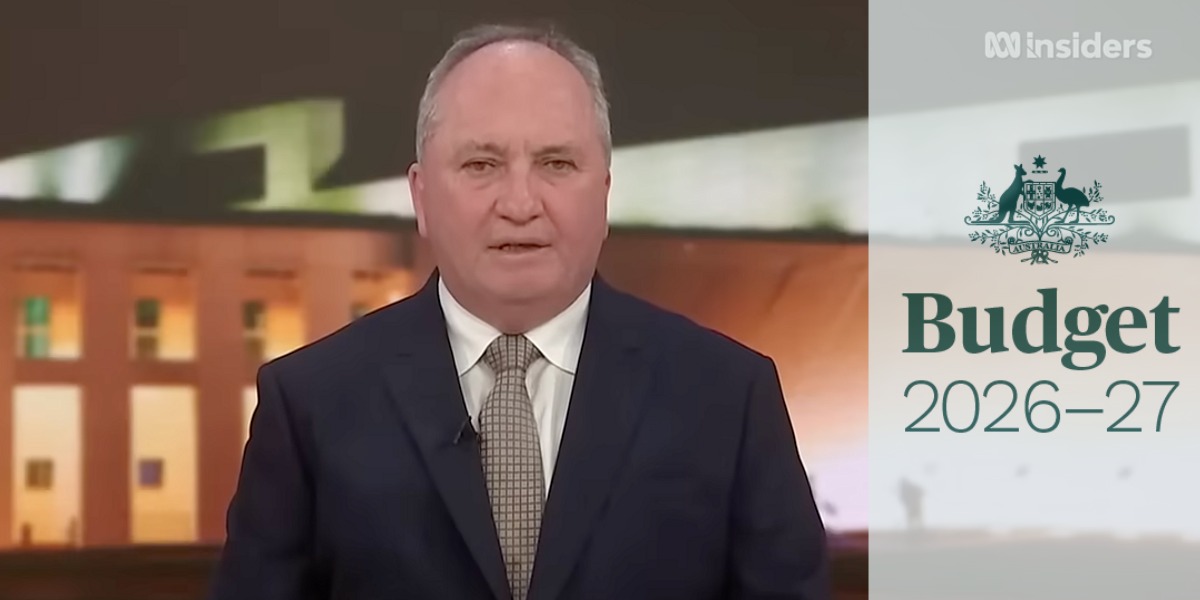
But New England MP Barnaby Joyce, speaking on the ABC last night, said the reforms punish the very people who create jobs, businesses and investment.
“I think they’re destroying the inspiration of people who are entrepreneurial,” Mr Joyce said.
“Anybody who takes a risk to build up a business, who starts from nothing, works on the premise that one of the great fruits of their labour is that later on they sell that business for a substantial capital gain.”
Mr Joyce warned the changes could push investment and talent overseas.
“So the smartest thing for people who are clever enough to develop a new form of energy, a new computer program, a new kind of motor car – whatever you like – is to leave Australia and go to Singapore or the United States, where they attract entrepreneurship, not smash it,” he said.
He argued the government’s housing reforms would fail to deliver the promised improvements for renters and first home buyers.
“This fallacy that there are a whole range of people out there who are only renting because they wanted to – that they were actually undercover first home buyers and just renting by choice – and now that we’ve brought in this change they’ll suddenly become first home buyers: no, they won’t,” he said.
“They’ll continue renting, and they’ll get pushed down the scale and out of the rental market and onto the street.”
Mr Joyce said the government was ignoring the real causes of the housing crisis, including planning costs, regulation and migration levels.
“If you try to build a house, have a look at how much – tens of thousands of dollars – you spend before you can even get a spade in the ground,” he said.
“You have to look at immigration policy. You can’t keep bringing people in at such a rate when there isn’t the housing stock to absorb them. It’s simple supply and demand.”
He also rejected the argument that any change to the housing market was automatically positive.
“You can’t just do anything and say, ‘That’s better than the status quo,’ because you might be doing something worse,” he said.
The reforms have also drawn criticism from CPA Australia, which described the budget as “a tax grab, not tax reform”.
CPA Australia Tax Lead Jenny Wong said the measures would disproportionately affect small business owners, ordinary investors and younger Australians trying to build wealth.
“This is not tax reform – it’s a revenue measure that shifts more of the burden onto middle Australia,” Ms Wong said.
“For anyone looking to invest, grow a business or take on risk, the message is clear – the government will take at least 30 per cent, regardless of the outcome.”
“That effectively creates a minimum tax on aspiration.”
Ms Wong warned the changes risked discouraging investment and productivity at a time when Australia should be encouraging entrepreneurship.
“Productivity depends on investment – particularly in higher-growth areas like start-ups, innovation and expanding businesses,” she said.
“These changes make that equation harder.”
She also warned the increased complexity of the tax system would favour wealthier Australians with access to sophisticated tax advice.
“The more complicated the system becomes, the more it advantages those with access to advice and the ability to restructure,” Ms Wong said.
“This is not levelling the playing field – it’s tilting it even further in one direction.”
Prime Minister Anthony Albanese defended the reforms, saying the government was trying to stop younger Australians being locked out of home ownership.
“We need to make sure that we don’t say goodbye to the Australian dream this generation,” Mr Albanese said.
ABC’s Patricia Karvelas was the first to label the budget a “class war”, setting up a traditional Labor versus Liberal fight.
“There will be a huge scare campaign as a result of this. The government is prepared for it,” she said.