

Emergency department presentations and surgical activity remained high across Northern NSW Local Health District (NNSWLHD) during the January to March 2026 quarter, according to the latest Bureau of Health Information (BHI) Healthcare Quarterly Report.
More than 58,000 people attended emergency departments across the district during the quarter, with patient complexity continuing to increase.
The report shows 58,014 ED presentations, up 2.4 per cent, or 1,366 presentations, compared with the same period in 2025.
Three-quarters of patients (75.4 per cent) began treatment on time, an improvement of 2.4 percentage points year-on-year.
Tweed Valley Hospital remained the district’s busiest emergency department, recording 14,863 presentations during the quarter, up 0.9 per cent, or 129 presentations, on the same period last year.
Ambulance arrivals also increased, with 10,694 patients arriving by ambulance across the district’s hospitals, up 12.3 per cent, or 1,169 arrivals, compared with the January to March quarter in 2025. The proportion of patients transferred from paramedics to ED staff within the 30-minute benchmark remained stable at 81.5 per cent.
Patient acuity continued to rise across the district.
The number of patients requiring resuscitation (Triage Category 1) increased by 28.5 per cent to 293 patients, while presentations requiring emergency treatment (Triage Category 2) rose by 12.8 per cent to 7,579.
Urgent presentations (Triage Category 3) also increased by 7.7 per cent to 21,463.
By comparison, semi-urgent presentations fell 1.7 per cent to 21,965, while non-urgent presentations declined 16.3 per cent to 4,012.
The shift coincides with increased use of alternative care options, including Healthdirect and expanded virtual care services across NSW.
NNSWLHD Director of Clinical Operations Lynne Weir thanked staff for their ongoing commitment to patient care.
“Activity across our hospitals in Northern NSW continues to rise and our staff are working hard to care for patients in a caring, timely, and efficient manner, as reflected in the latest quarterly results,” Weir said.
“This high activity comes as the level of acuity and complexity of patients attending our hospitals continues to rise. I’d like to thank everyone for their continuing commitment to providing outstanding care for our community.”
“We are continuing to invest in strategies to encourage people with less urgent care needs to seek treatment at one of the region’s primary health facilities such as the Tweed or Lismore Urgent Care Clinics, or by calling Healthdirect, where you can get connected to the right care, 24/7.”
Lismore Base Hospital and Tweed Valley Hospital are now operating under Safe Staffing Levels in their emergency departments, while Ballina District Hospital and Grafton Base Hospital are implementing the model.
The staffing boost provides a one-to-one nursing ratio for occupied ED resuscitation beds and one nurse for every three occupied ED treatment spaces and short-stay unit beds across all shifts.
All patients presenting to an ED are assessed and triaged on arrival, with the most seriously unwell patients treated first. During periods of high demand, patients with less urgent conditions may experience longer wait times.
The district also maintained a strong focus on planned surgery, completing 3,499 procedures during the quarter, up 2.7 per cent, or 93 surgeries, compared with the same period last year.
The increased activity contributed to a 7.2 per cent reduction in the district’s surgical waiting list, with 393 fewer patients waiting for surgery at the end of the quarter than a year earlier.
Across the district, 78.7 per cent of planned surgeries were completed on time, an improvement of 7.9 percentage points.
Almost all patients requiring urgent surgery (99.4 per cent) received treatment within clinically recommended timeframes, up 10.4 percentage points on the same period last year.
The proportion of non-urgent surgeries performed on time also improved, rising 15.2 percentage points to 76.8 per cent.
Patients concerned their condition has deteriorated while waiting for surgery are encouraged to contact their treating doctor for reassessment.
People with non-life-threatening illnesses or injuries are encouraged to contact Healthdirect on 1800 022 222 for 24-hour health advice from a registered nurse.
Hospital snapshots
Ballina District Hospital recorded 4,771 ED presentations during the quarter, up 4.5 per cent year-on-year. More than 86 per cent of ambulance patients were transferred to ED staff within 30 minutes, while 80.1 per cent of patients left the ED within four hours. The hospital completed 263 planned surgeries, with all urgent and semi-urgent procedures performed on time.
Grafton Base Hospital recorded 7,419 ED presentations, up 5.5 per cent. More than 73 per cent of patients left the ED within four hours, above the average for comparable NSW hospitals. The hospital completed 527 planned surgeries, with 97.8 per cent of urgent procedures performed on time.
Lismore Base Hospital recorded 10,663 ED presentations, up 7.6 per cent. Ambulance arrivals increased 12.8 per cent to 3,254 patients, with 78.4 per cent transferred to ED staff within 30 minutes. The hospital completed 1,146 planned surgeries, with all urgent procedures performed on time.
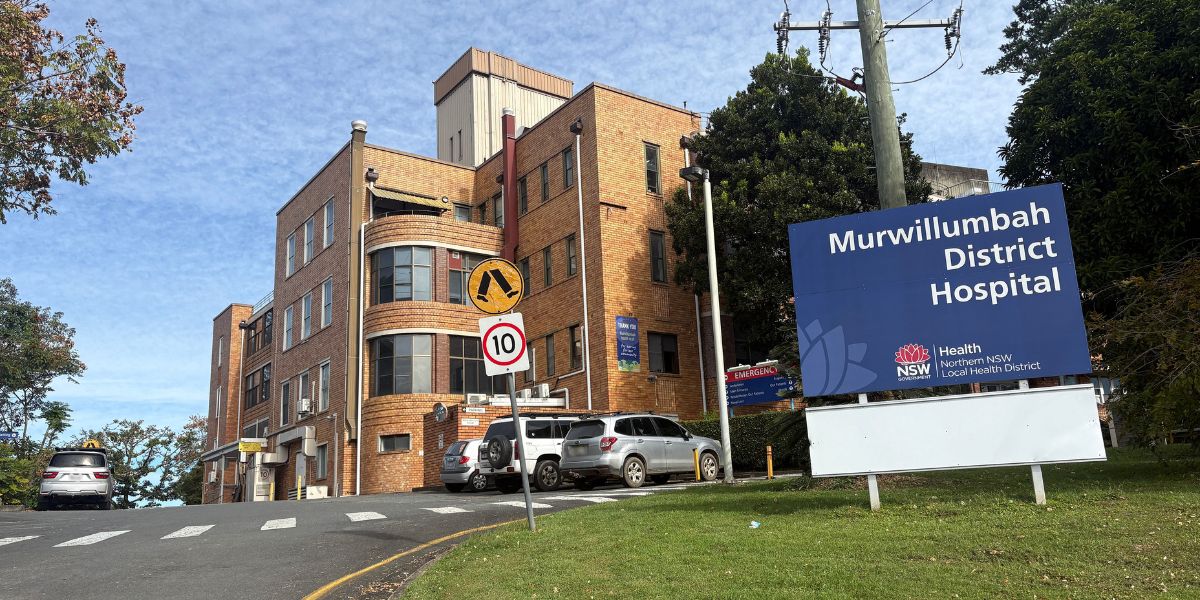
Murwillumbah District Hospital recorded 4,591 ED presentations, down 5.3 per cent on the same quarter last year. More than 90 per cent of patients began treatment on time and left the ED within four hours. The hospital also achieved a 98.4 per cent ambulance transfer rate within the 30-minute benchmark and completed 318 planned surgeries.
Tweed Valley Hospital recorded 14,863 ED presentations during the quarter, up 0.9 per cent. Nearly 80 per cent of patients began treatment on time, outperforming the NSW average for comparable hospitals. The hospital completed 1,019 planned surgeries, an increase of 13.5 per cent, while 98.9 per cent of urgent surgeries were performed on time.
Further information is available at www.bhi.nsw.gov.au/data-portal.
Don’t miss any of the important stories from around the region. Subscribe to our email list.