

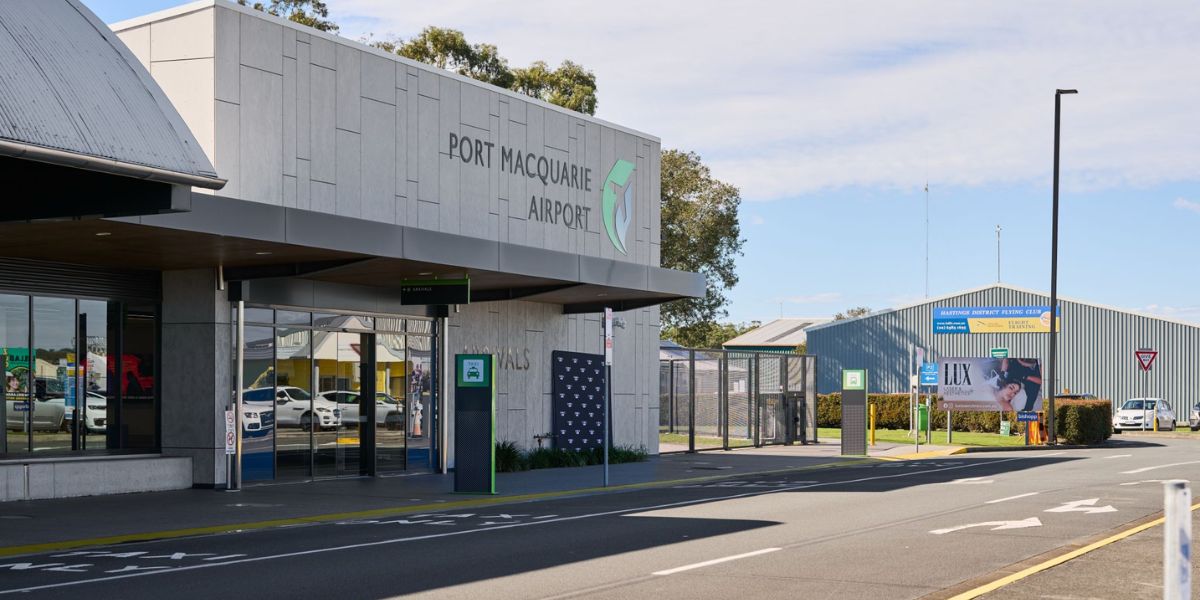
Port Macquarie businesses are being asked to help bring back direct flights to Melbourne, with the airport running a survey to build the case for airlines to reinstate the route.
The push comes as a major new report warns that regional aviation across NSW is under serious and growing strain — and that without coordinated action from governments, more communities face losing the connections that keep them economically viable.
Port Macquarie Airport wants to know how often local businesses travel to Melbourne, and whether a direct service would change their behaviour. The data will be used to put a commercial case to airlines. The survey closes Tuesday, 30 June, giving businesses two weeks to have their say.
Business NSW Regional Director for Mid North Coast, Rod Barnaby, said the region knew better than most what was at stake.
“Regional airports are critical economic infrastructure that support business growth, tourism, freight, emergency services, healthcare access and workforce mobility,” Mr Barnaby said.
“Without action, regional communities risk losing connectivity that underpins economic growth, investment and livability.”
Port Macquarie lost its direct Melbourne service when Bonza collapsed in 2024, stranding more than 40,000 annual passengers overnight. Travellers were forced to reroute through Sydney or Brisbane, adding up to four hours to their journeys and pushing up costs for businesses, tourists and health services that had relied on the link. The route had been critical for business travellers, health professionals and short-stay visitors from Victoria.
More recently, Qantas paused its direct Coffs Harbour to Melbourne service for four weeks from May, a further sign of how quickly regional connectivity can shift when airlines adjust their networks.
The vulnerability is not unique to the Mid North Coast. Business NSW launched its policy paper Keeping Regional NSW Connected: The Future of Our Airports earlier this month, finding that more than 60 regional airports and aerodromes across NSW are under mounting financial and operational pressure. More than half of small regional airports are running at a loss, annual investment across the sector sits at just 3.3 per cent of replacement asset value, and much of the infrastructure was built in the post-war era and is now at or beyond design life.
Market concentration is making things worse. Recent Australian Competition and Consumer Commission monitoring found that 62 per cent of regional and remote routes nationally are now served by a single airline. In January this year, Qantas announced it would pull its Melbourne services from Albury and Wagga Wagga from March.
Australian Airports Association Chief Executive Officer Simon Westaway said the need for long-term investment was clear.
“Regional airports play an essential role in connecting communities, supporting local economies and enabling critical services. Ensuring these assets remain sustainable and future-ready is vital for regional Australia,” Mr Westaway said.
Business NSW is calling on the NSW and Commonwealth governments to deliver eight reforms, including a ten-year state aviation strategy, a dedicated regional airport infrastructure fund, route-continuity protections against sudden service withdrawals, guaranteed regional access at the new Western Sydney International Airport, and a public performance dashboard to track airfares, cancellations and service reliability.
Mr Barnaby said the decisions made now would shape the region for years to come.
“Regional aviation is facing a period of significant change. Decisions made now will determine whether regional NSW remains connected, competitive and positioned for future growth.”
“This paper provides a practical roadmap for governments and industry to work together to strengthen the aviation network that regional communities and businesses rely on every day.”
The Port Macquarie Airport survey is the first step in making that case locally. Businesses can complete it here before June 30.
Read all the way through to the end of the story? So did lots of other people. Advertise with North Coast Times to reach locals who are interested and engaged. Find out more here.