

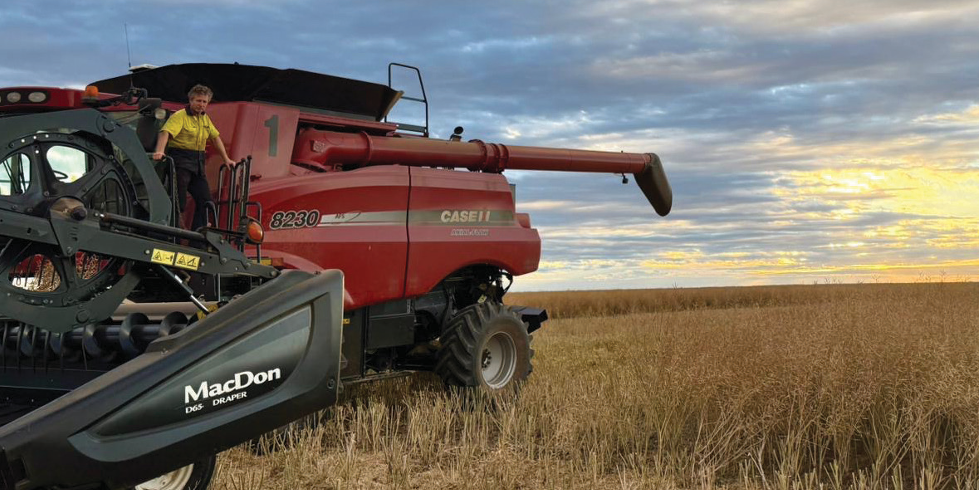
A new report from Farmers for Climate Action is calling for the protection of diesel rebates for farmers while accelerating investment in electric farm machinery and regional energy infrastructure.
The report, Energy Sovereignty for Regional Australia: Protecting Farmers, Powering the Future, argues that rising fuel costs, supply disruptions and dependence on imported diesel are creating ongoing challenges for farmers and regional businesses.
The roadmap recommends retaining access to the Fuel Tax Credit Scheme for farmers and related industries, while introducing a $50 million cap on claims by the largest recipients.
South Australian grazier Ellen Litchfield said the report recognised the importance of maintaining support for farmers while examining reforms to the scheme.
“The roadmap finds that farmers should be guaranteed access to the diesel fuel rebate, but discount diesel should be capped for the biggest mining companies to protect the financial sustainability of the rebate.”
The report identifies electrification of farm equipment, powered by renewable energy generated on farms, as a potential way to reduce operating costs and improve energy security.
Western Australian mixed farmer Simon Wallwork said new technologies could provide both economic and operational benefits for producers.
“Generating clean energy on-farm and moving toward electric machinery is a major opportunity to cut costs. By embracing these new tools, we can capture the benefits of the energy shift while making our farms much more resilient and productive.”
Farmers for Climate Action said many producers are already reducing diesel use through the electrification of irrigation systems, water pumps and processing equipment. The report also points to growing use of electric heavy vehicles in the freight sector as evidence of broader industry change.
Queensland irrigator, cotton and grain grower Renée Anderson said reducing dependence on global fuel markets often requires significant upfront investment.
“It’s unfair that family farms face massive upfront costs just to reduce their vulnerability to global events. The playing field needs to be levelled.”
The report proposes increased investment in regional transmission infrastructure and energy storage, arguing this could support greater use of locally generated energy.
Victorian winemaker Michael Unwin said policy development should involve regional communities and businesses.
“The government should seek out local voices to help it coordinate its policies with the needs of local manufacturers and regional suppliers so the economic benefits stay in our communities.”
New South Wales beef cattle farmer Martin Murray said fuel security was becoming an increasingly important issue for the agricultural sector.
“We are an extremely fuel-insecure nation. To remain an agricultural powerhouse, we need to invest in other systems and technologies that allow us to reduce our dependence on imported fuel.”
The report also explores the role of biofuels as a transitional option for older machinery while electric alternatives become more widely available for stationary equipment and, eventually, heavy farm machinery.
Tasmanian farmer and agricultural adoption adviser Marcus James said greater energy independence could help improve farm profitability.
“Energy sovereignty gives farmers more control over the cost of their own energy. Farmers want access to fuel and energy that reduces our costs and keeps more economic value in rural Australia.”
South Australian rangelands beef cattle producer Gillian Fennell said farmers had a long history of adopting new energy technologies.
“From the early RAPS units to modern solar pumps – farmers have been early adopters of renewables. Government needs to focus on removing the barriers to enable more farming businesses to upgrade their equipment and invest in new technology.”
Roadmap author Professor Ray Wills said reducing diesel dependence should be a priority for policymakers.
“Diesel dependence is a vulnerability. Energy sovereignty is the opportunity. The job of policy now is to turn that opportunity into practical change – reducing exposure, lowering risk, and giving regional Australians more durable control over the energy systems their businesses and communities depend on.”
Farmers for Climate Action chief executive Verity Morgan-Schmidt said recent fuel supply concerns had highlighted the need to consider a wider range of energy options.
“The fuel supply disruption has highlighted just how vulnerable our sector is. The time has come for us to look at all sensible options to accelerate our shift towards energy sovereignty.”
She said a transition towards electric machinery powered by renewable energy could strengthen regional energy security.
“Why would we rely on imported diesel we can’t control when, with sensible shifts, we can help build the systems to get us to electric machines running on cheap, clean energy powered by the Aussie sun?”
Morgan-Schmidt said the report’s proposed cap on large Fuel Tax Credit Scheme claims could help support the transition while maintaining assistance for farmers.
“Putting a sensible cap of $50m on the Fuel Tax Credit Scheme, while protecting farmers, is just a no-brainer when it comes to accelerating the shift to electrification for heavy machinery.”
She said the proposal would encourage investment in alternative technologies by major fuel users.
“In a cost-of-living squeeze, why should we continue to encourage the biggest companies to enjoy unlimited taxpayer-subsidised diesel? There is a real opportunity for these biggest users to shift their focus to an electrified fleet; accelerating technology and bringing down emissions.”
The report is available from Farmers for Climate Action.
Like what you’re reading? Support North Coast Times by making a small contribution today and help us keep delivering local news paywall-free. Donate now