

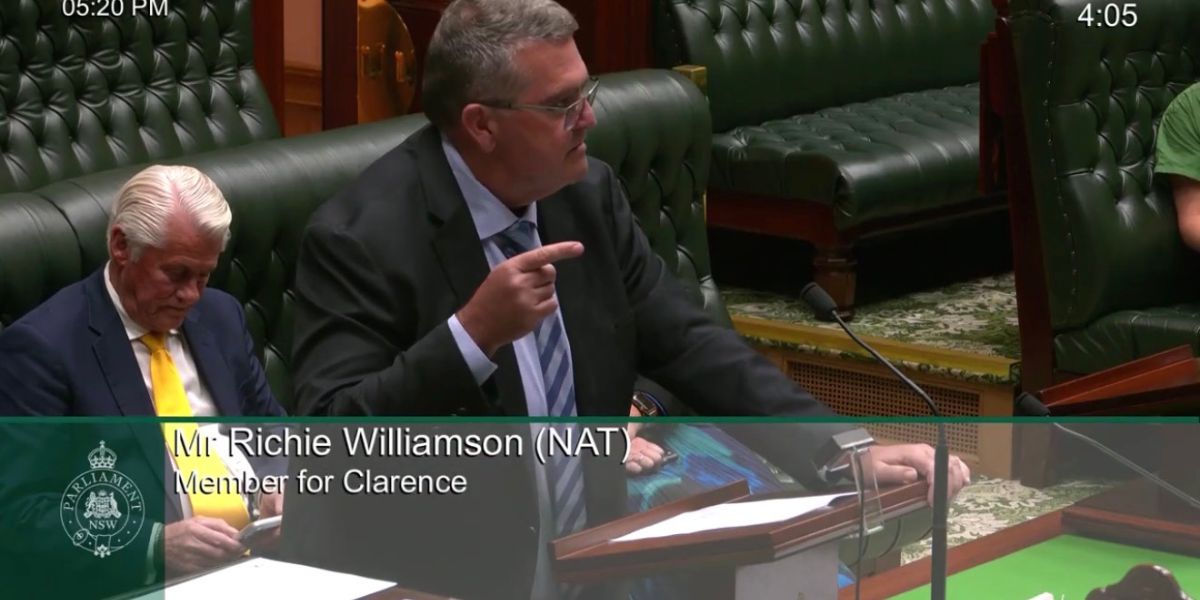
State Nationals MP for Clarence Richie Williamson has called in NSW Parliament for increased funding to curb the spread of cattle tick across the Northern Rivers, including the Clarence electorate.
Williamson said cattle tick infestations had risen sharply across the region in recent years, placing significant pressure on local producers and threatening a key primary industry.
“Industry concerns were highlighted at a recent meeting I attended in Casino. The number of outbreaks were sobering, with six cases recorded from 2019 to 2022, to 21 since the Minns Government was elected,” Williamson said.
“The beef and dairy industries across the Northern Rivers are worth many hundreds of millions of dollars and remain at serious risk if the NSW Government doesn’t get on top of cattle tick.”
Williamson said the impact was already being felt by local farmers.
“Hundreds of head of cattle have died over the past two years, including around 30 in the Kyogle district just weeks ago. That is devastating for local farming families and clearly shows the current ‘self-manage’ arrangements are not working,” he said.
Williamson called on the State Government to strengthen its response, including by increasing support for farmers dealing with infestations.
“I’m calling on the NSW Department of Primary Industries to work more closely with landholders, provide stronger on-ground support when infestations are detected, improve tracing systems, and increase compliance checks,” he said.
He also called for the establishment of a dedicated rapid-response “hit team” to help contain outbreaks and protect unaffected areas.
“This is a growing biosecurity threat, and it requires boots on the ground to get ahead of it.”
Mr Williamson said the financial burden on farmers dealing with cattle tick was substantial and often immediate.
“If an infestation is detected, producers are required to undertake 12 rounds of treatment for all stock, 21 days apart. That is a huge impost, both financially and operationally, and in many cases can bring farm income to a halt overnight,” he said.
“We must ensure farmers are not left to fight this battle alone.”
Williamson said a recent funding announcement was a positive step, but more targeted action was needed to safeguard the future of the Northern Rivers livestock industry.
Something going on in your part of the North Coast people should know about? Let us know by emailing newsdesk@nctimes.com.au