

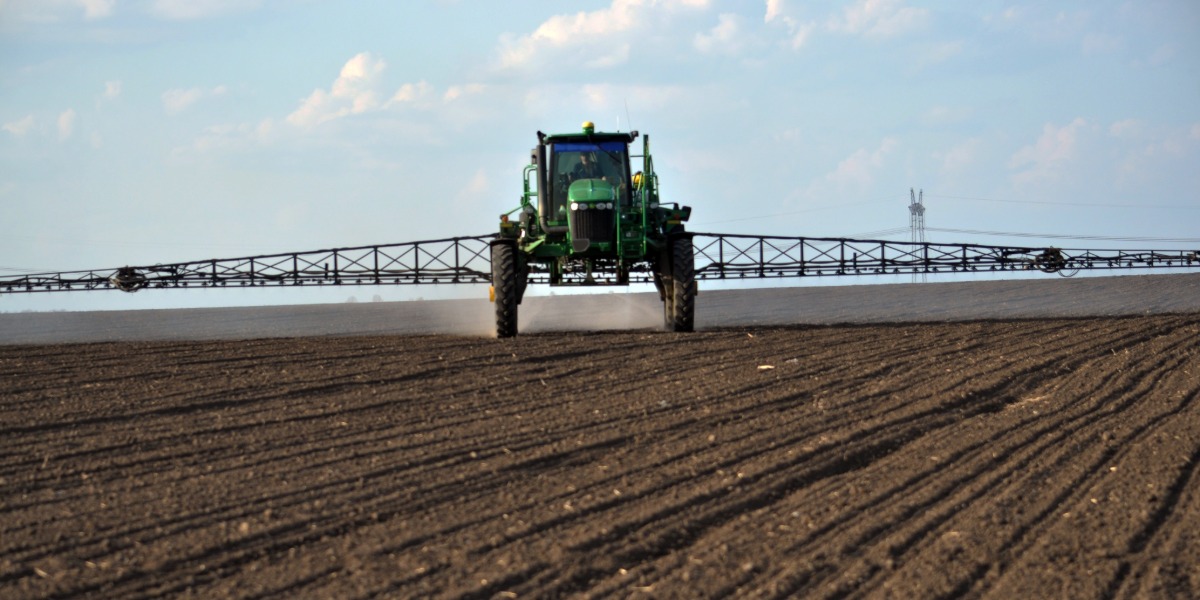
Farmers will still be able to use two widely used herbicides following a major federal review, but under significantly tighter conditions — and the decision has already drawn sharp criticism from Parkinson’s disease advocates who say Australia has waited too long to act.
The Armidale-based Australian Pesticides and Veterinary Medicines Authority (APVMA) has handed down its final decisions on paraquat and diquat, two non-selective herbicides commonly used in broadacre farming and weed management. Both chemicals will remain registered for use, but the maximum application rate will drop from 1,150 grams per hectare to 231 grams per hectare — a reduction of 80 per cent.
APVMA CEO Scott Hansen said the decisions applied contemporary risk management frameworks to the scientific evidence.
“Both chemicals remain available for use with significant new restrictions on application rates and permitted uses.
“To protect users from acute exposure, new restrictions will phase out backpack sprayers and require enclosed mixing and loading systems for all uses, and enhanced personal protection equipment.”
A higher application rate applies to technology-assisted spot spraying, where application is capped at 30 per cent of the total area. New registration conditions will apply to all products manufactured from today, with a two-year phase-out period for existing stock to allow farmers time to identify alternative weed management strategies and implement new safety measures.
The APVMA said it received 171 submissions during the review from scientists, doctors, the agricultural industry and other interested parties. In making its decision, it found the weight of evidence did not show that paraquat exposure through approved uses increases the risk of developing Parkinson’s disease.
The National Farmers’ Federation acknowledged the decision but said it would take time to consider the full implications for farm businesses.
“Without healthy people and a healthy environment, there is no food and fibre production. That’s a fundamental reality for every farm business,” said NFF President Hamish McIntyre.
“We acknowledge the community concern around paraquat, and it is absolutely critical that the products farmers use are safe for both people and the environment.”
McIntyre said the APVMA’s independence was critical to maintaining trust in the process.
“Decisions about agricultural chemicals are made by the APVMA, an independent, science-based regulator that assesses the latest evidence from Australia and around the world against our unique conditions. Farmers rely on that independent process.”
He said paraquat had played a significant role in modern farming systems, particularly in supporting no-till practices that protect soil health, reduce erosion and retain moisture — practices that have become increasingly important as farmers manage more variable seasons.
Chemical company Sygenta announced earlier this year it would cease production of the chemical this month, attributing the decision to generic producers eroding its market share rather than to regulatory pressure or the #BanParaquat campaign mounted by Parkinson’s advocacy groups. Shine Lawyers are planning a proposed class action against Syngenta in Australia on behalf of people who developed Parkinson’s disease after exposure to the chemical.
Parkinson’s Australia have rejected the APVMA review outcome in strong terms. CEO Olivia Nassaris said the measures did not go far enough and that Australia had fallen well behind international standards.
“The APVMA has failed not only farmers who use paraquat, but all the other Australians exposed to it,” she said.
“In the 30 years they’ve been reviewing this chemical, 70 countries around the world have banned it, yet we’ve still got Aussie farmers using it every day. We’re the last to act here, and we’ve failed.”
Further information on the APVMA’s decision, including technical reports, is available at apvma.gov.au.